
the allure of direct drive
Low tech, big fun
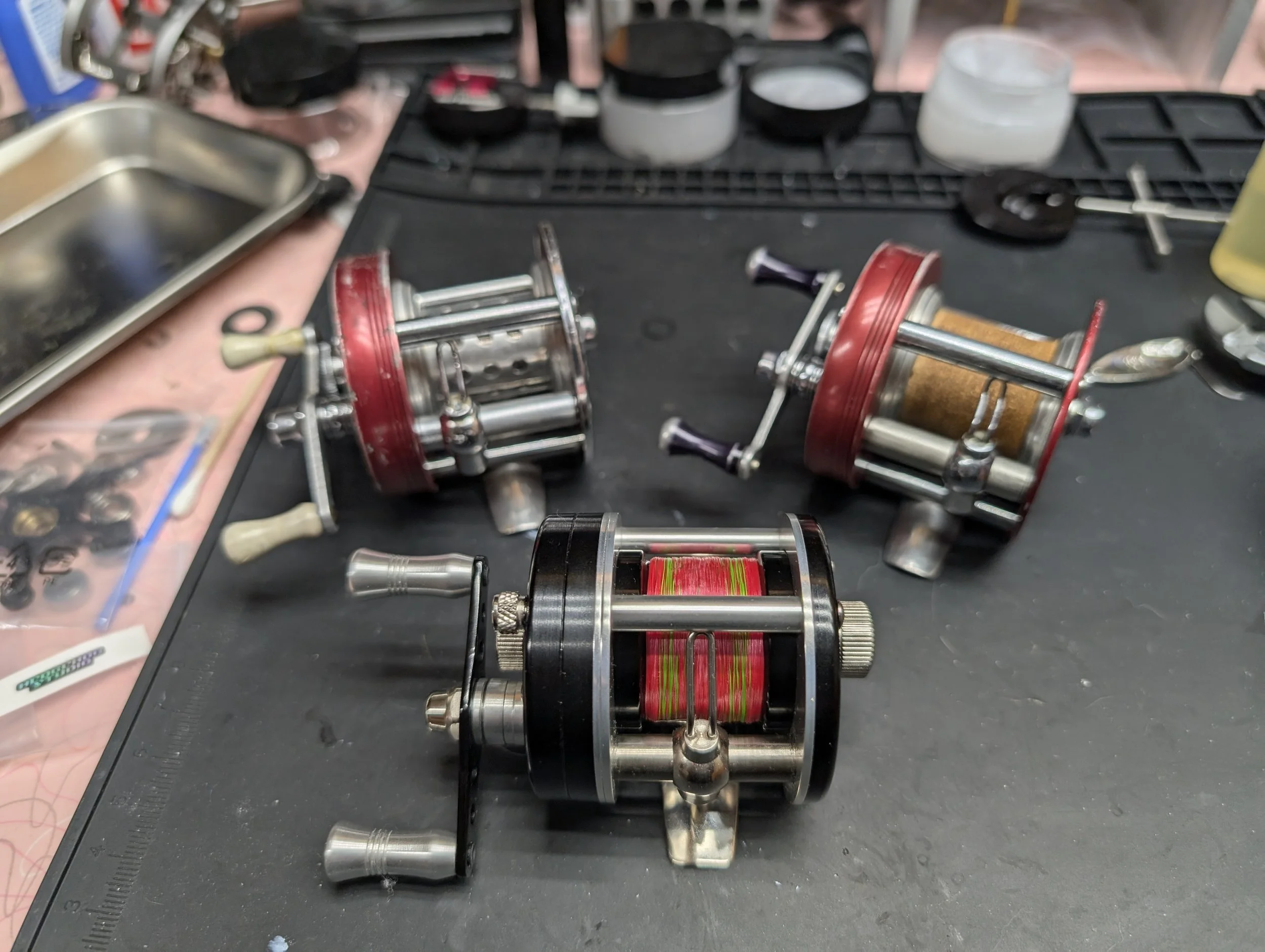
No drag, no anti-reverse, sometimes no brake, and just your thumb. Does it sound like fun? Probably not, but in practice, it’s a blast. While a relic of a bygone era, when the USA had countless reel manufacturers, the direct drive dominated the baitcasting market. Manufacturers like Shakespeare, Heddon, Pflueger, Langley, South Bend, and Bronson dominated the market in those days. Aficionados often refer to them as knuckle busters, because a big fish making a hard run can result in a burned thumb and a whack or two on your hand. In the old days when fishermen chased big fish with these reels, a leather guard was often used for applying pressure to running fish without sacrificing the thumb. Some world records were also set with these reels. The world record musky, weighing 67lb 8oz, was caught by Cal Johnson in 1949 on a South Bend Perfect-O-Reno direct drive. That record still stands to this day, 77 years later, and if it is broken, the angler will most likely have an easier time due to the technological advantage of modern reel models. Comparably, landing the record breaking fish will be a cakewalk compared to Mr. Johnson.
Delving deeper into direct drive, they are among the simplest of reels ever made. With the spool coupled to the handle and level wind, a minimum of parts are required. While we have come a long way since, there is something about fishing these antiques that makes you pay more attention to the way you fish. Keeping your thumb on the spool and hand on the handle at all times is a requirement, because if you don’t, you can get spooled or a runaway fish can even make it backlash. These reels are also a tuner’s delight, as they respond very well to polish work and modern synthetic lubricants to free them up. There is even a cottage industry with lighter spools and handles to make them perform better. While not nearly as popular as they were 70+ years ago, some still fish with them. There are even a few new production models out there made by Isuzu Industries in Japan who use ball bearings, wider pitched level winds, magnetic braking systems, and lighter spools and handles making them even capable of ultralight fishing.
If one were to dip their toe into the realm of knuckle busters, by far the best reel to acquire would be a Langley Lurecast 330. Why the Langley? For starters, they can be acquired quite cheaply. They are still abundant just about everywhere; antique shops, tackle shows, garage sales, estate sales, Facebook Marketplace, and eBay. It should be no problem getting one for $20 or less. Personally, I’ve paid as little as $5. If you wish to find a mint reel, then you are looking at $50 or more, especially if it’s new old stock with the box. What makes Langley so special, you may ask? It has a lightweight ported spool and is constructed of aluminum, weighing a mere 5 ounces. You see, most reels in that time period had heavy spools which made them very prone to backlash unless you had a black belt in Thumb Fu. The much lighter spool of the Langley is much easier to control since it starts and stops much easier. The spool itself weighs just 15 grams, pinion gear included, which was a feather in 1946, and even very light by today’s standards. Even modern Shimano MGL spools weigh about that. Does that sound impressive? Yes, because we are talking about an 80 year old reel. Furthermore, the Langley will cast lures as light as ⅛ of an ounce with a good polish job and low viscosity oil with the right rod. That too is impressive. As far as modern reels go, we wouldn’t see models capable of casting such light lures until the 1990s, and even then it was a stretch.
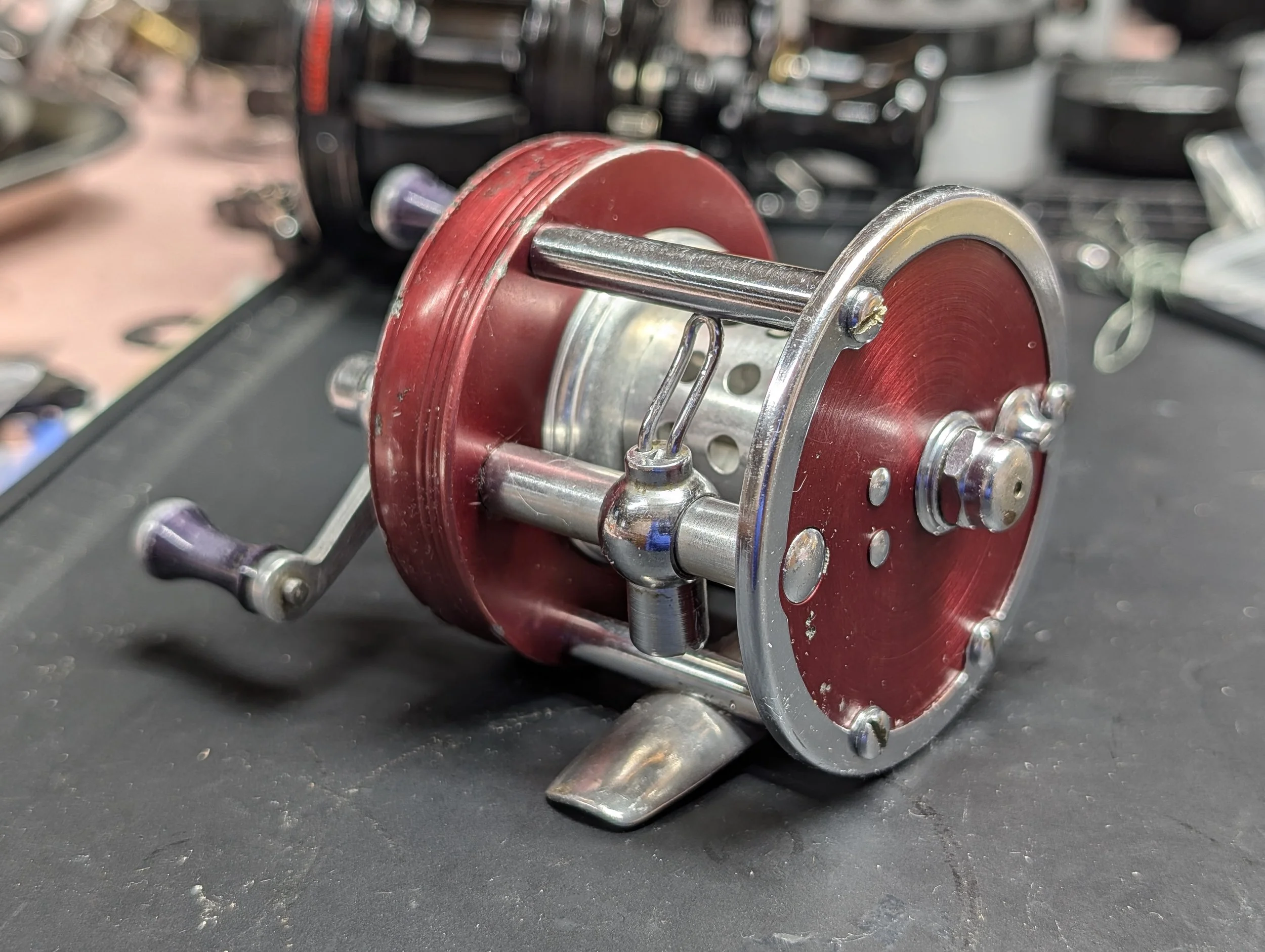
Langley Lurecast KC330
Now that you have acquired your Langley, how do you go about tuning it? The methodology is somewhat different from a modern baitcast reel. Being that these all had bushings, you will want to get out your rotary tool and metal polish. You will also need a solvent to clean the polish residue from the bushings. Lastly, oil. Under no circumstances should an antique direct drive be greased. While grease has better protective properties than oil, grease also slows these down considerably. In a more modern reel, the gears would be greased, but in a knuckle buster, oil is what you want to use. Not just any oil, but a low viscosity oil that bonds to metal is ideal. My personal favorite is TSI 321 since it’s low viscosity and stays put for a long time, often not coming off until cleaned with a solvent. Following these steps will get your Langley in tip-top shape. If you want to make the spool more shallow to accommodate thread line braid, you can wrap the arbor of the spool with cork tape. If a cork tape job doesn’t sound appealing, simply use fly reel backing then join it to your main line of choice and a monofilament or fluorocarbon leader for fishing.
While there are a multitude of knuckle busters out there, what about modern? As luck would it, they are still made by a small manufacturer in Japan, Isuzu Industries. Isuzu Industries is unrelated to the auto manufacturer, but a small shop that started making reels in the 1950s. Today, they are a maker of boutique reels and only sell their products via lottery system. Furthermore, Isuzu reels are bench made by expert craftsmen which makes them expensive to begin with. The MSRP of Isuzu’s latest direct drive model, the DD310SSS, runs ~$450 at the time of this writing, just as expensive as the latest and greatest from the likes of Daiwa and Shimano. That’s for a technologically inferior reel at that. Being sold through a lottery system can make them hard to acquire, and on the second hand market they go for even more than they do new from Isuzu. Unlike antique models, the new direct drive models feature ball bearings, lighter handles, lighter line guides, wide pitched worm gears, lightweight spools, and braking systems to make them perform on a whole different level than their ancestors. More importantly, they also come in left-hand retrieve for those looking to get in on the relatively recent hype surrounding it. If you desire a left-hand model, this is the only way to go unfortunately.
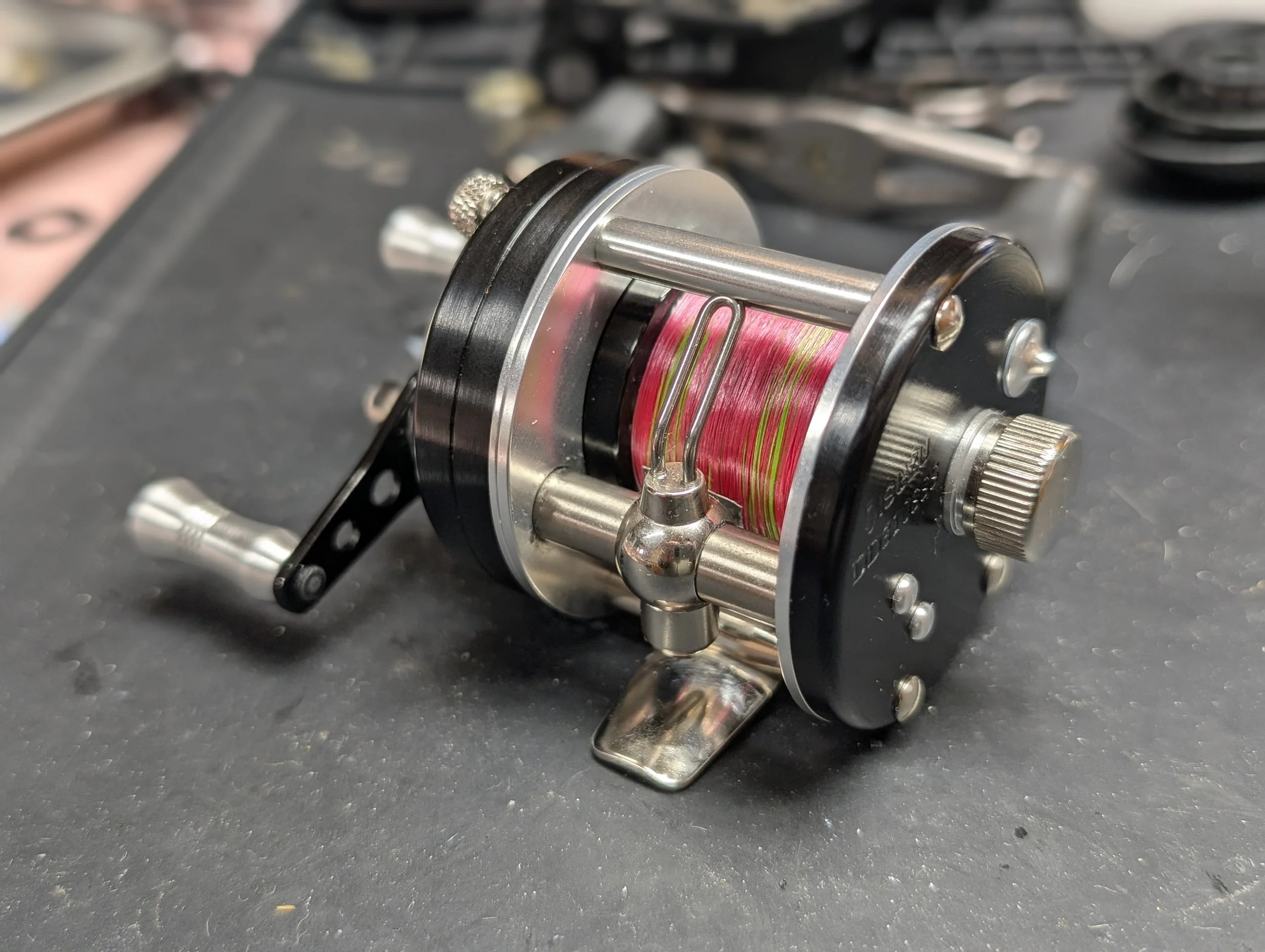
Isuzu DD310SSS with a Tough Light spool
With all of that said, which one is right for you? Are you willing to put in a little time and elbow grease to race out a Langley, or do you want something a little more capable, yet exponentially more expensive. Owning and using both, I do prefer the Isuzu, but not by much. Truthfully, fishing with the Langley is what made me want the Isuzu in the first place. The little red Lurecast 330 was my gateway drug into these reels and I would have no qualms if it was my only direct drive. With small makers of cheap and lightweight parts available to make them perform even better, I have no doubt it could perform at a level similar to the Isuzu for a lot less cash outlay. Go out and find one, get your tools out, and have fun. There’s something different about these; the challenge is that it's unlike a more modern reel with a drag and anti-reverse. If there’s anything to be said of them, they’re a complete hoot to use, and that’s what makes it fun. Fishing is all about having fun. How you do it it is up to you, and having fun is what makes it an enjoyable sport and hobby.