
a beast in the creek, full send 2500c
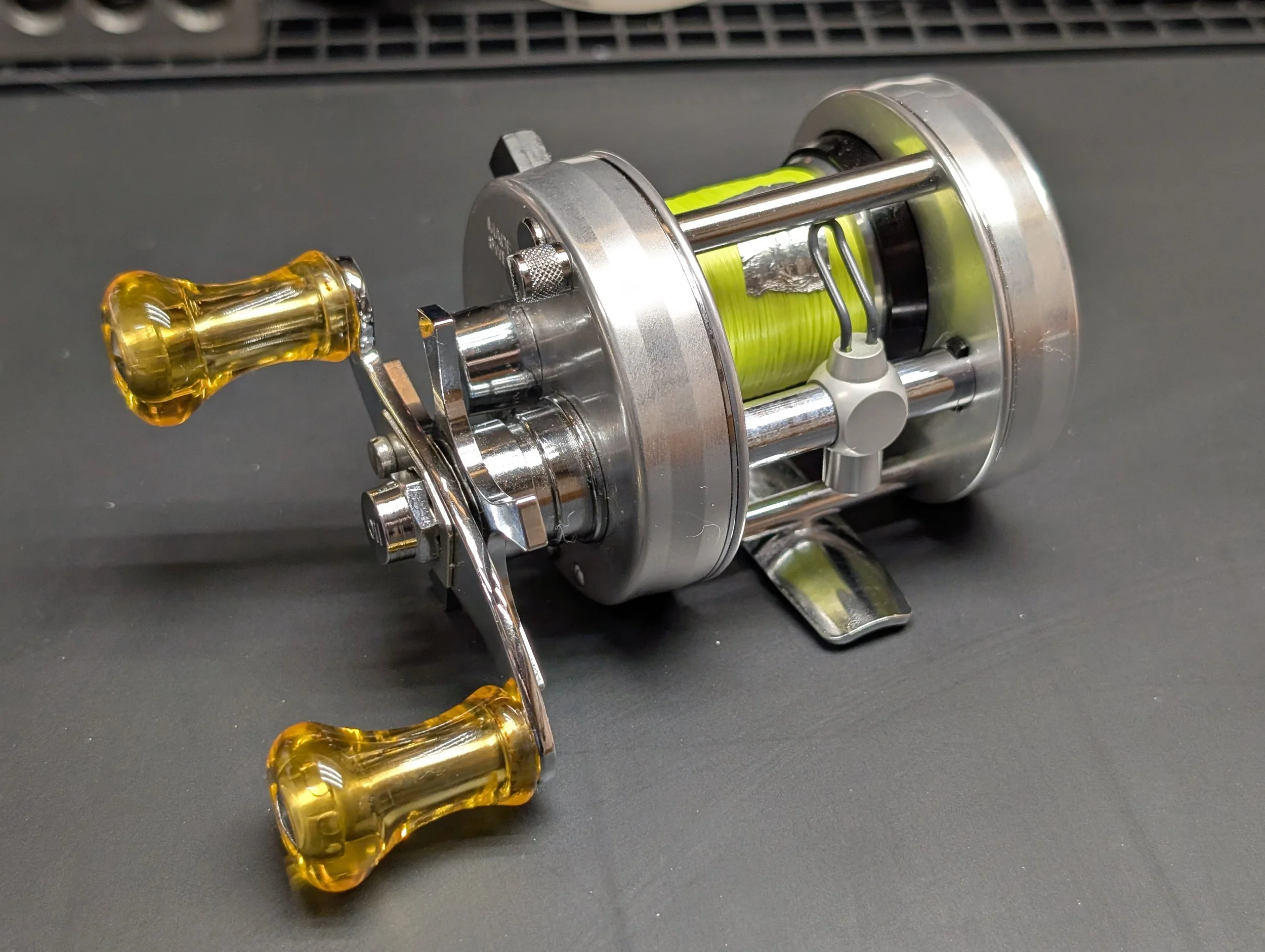
The subject from A Freak in the Creek
If you’ve read my previous post, A Freak in the Creek, this is for you. If you haven’t, I highly suggest it as that will give you the baseline upgrades to make your 2500C a true bushwhacking machine. In the post, I laid out a baseline upgrade path; the bare minimum to get your 2500C ready for lighter trout-sized lures. That article focused solely on the rotating assembly, purposely leaving out upgrades related to ergonomics, weight savings, and overall usability. In the following paragraphs we will explore those other options such as faster gears and more robust components so that you can bring your 2500C into the 21st century, while retaining the classic looks that keep this design timeless.
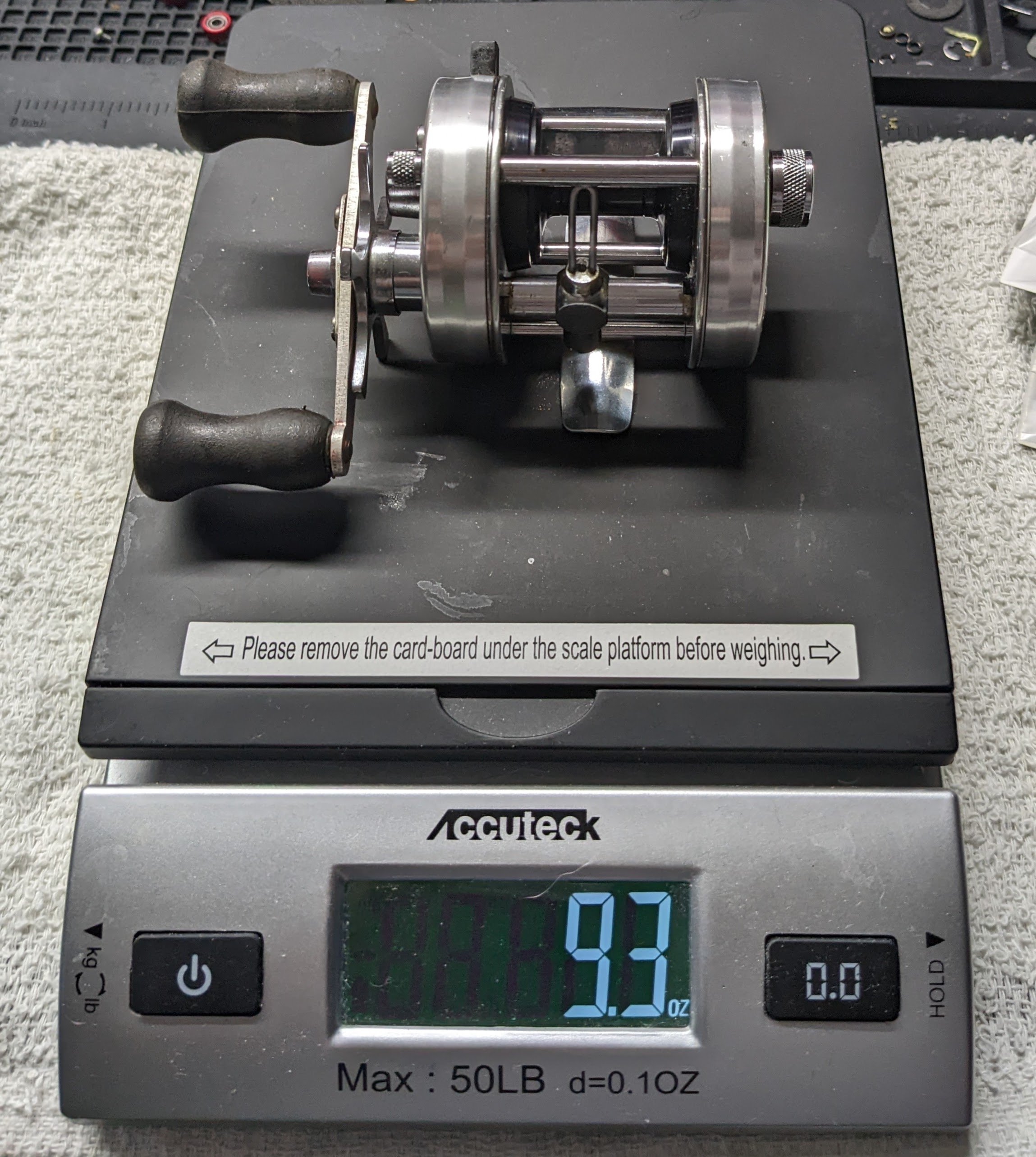
2500C in factory trim
The absolute first complaint that I see in regards to the 2500C is lack of speed, which is quite a valid concern. 50 years ago when the reel hit store shelves, the 4.7:1 gears paired with a 30mm diameter spool enabled it to bring in 16” per turn, and with the debut of the 2500CI and 2500CIAR, Abu Garcia bumped the gear ratio to 5.3:1, allowing for 18” per turn. Fast forward to now, and that is painfully slow. While they are great for deep diving lures, they really don’t have much more to offer. Fishing fast water or keeping the heat on a charging fish can prove both difficult and tiring which is why the gears should come first. Below, we will explore the various sets available as well as their benefits and shortcomings so that you can make a more informed decision.
The first set I will discuss are the very widely used Avail 6.1:1 gears, which are available for both left and right hand retrieval as well as the thumb bar variants such as the 1600C and 2600CIAR. As far as noise and smoothness go, these are the ones to get. With the steeper pitch and micro teeth, they are the quietest of the bunch and exceptionally smooth. These bump up the speed to 22” per turn, which is a significant increase over OEM gearing, great for fishing fast water. When paired with the accompanying pinion bearing set, it makes for a very refined feel. While these are smooth and speedy gears, they do have one glaring fault. The pinion gear is tiny and has a weak crown. Avail rates them to ~2lb of drag at the max, a significant drop from OEM which are rated to 6lb. If resident trout are the target species, the Avail gears are perfectly suitable. With that said, these are not the gears you should use if a tighter drag is needed; at some point, the crown will deform and need to be replaced.
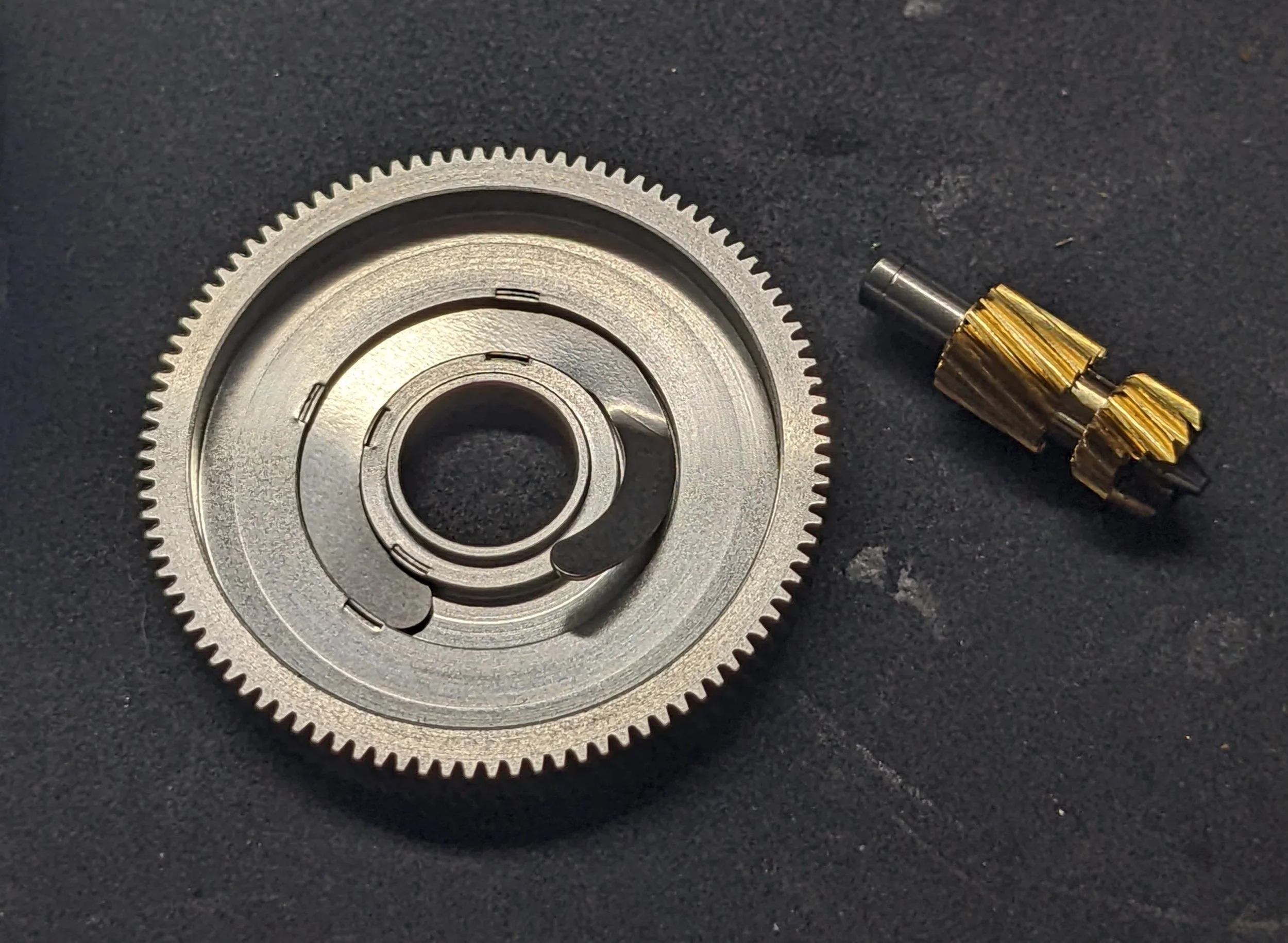
Avail 6.1:1 high speed gears
Next up, the Valleyhill 7.0:1 set. Here is where things get dicey. Look at that ratio! That’s quite impressive to say the least. This set delivers an astounding 25” per turn, but the pinion gear is even smaller than the Avail 6.1:1 set. This means that it delivers even less maximum drag. To my knowledge, Valleyhill hasn’t disclosed the max drag rating, so proceed with caution. Yes, they are blistering fast for this platform, so if you use them, set your drag light and thumb the spool when needed. The pinion gear is so tiny that using an aftermarket clutch like Simon Shimomura’s may cause the pinion to bind, and the pinion shaft doesn’t fit the Avail pinion bushing properly. While not a completely useless set, I feel this one shouldn’t even be taken into consideration. Speed aside, there really aren’t any other benefits that would make it worth choosing over the others.
Lastly, we have the 6.3:1 set from Mr. Ambassadeur himself, Simon Shimomura. These gears are made for the 1500C and 2500C only. There are no left-hand variants and none that work with the thumb bar models. Simon’s gears are rated to bring in 23” per turn, just a little more than Avail and a little less than Valleyhill. Now, here is where Simon’s gears really stand out, the pinion gear. It’s big and beefy and the crown is cut in a manner that makes it much more difficult to deform. As a matter of fact, Simon’s pinion nearly doubles the maximum drag capacity of the OEM gears, from 6lb to 11lb to be exact. Holy cow! Speed and strength, this is the complete package. 11lb of drag doesn’t sound like too terribly much by today’s standards, but many of the latest and greatest reels from Shimano and Daiwa have similar drag numbers. If you want to chase harder fighting fish like migratory trout or even salmon, look no further. Do you want to pull bass from the slop? These are your gears. Like all things, there is a “gotcha”. Due to the tighter tolerance between the gear teeth, these are the noisiest of the three. Please don’t mistake noise for lack of smoothness, because these are very smooth. It’s just that the larger teeth are closer tolerance than OEM, which makes them louder. These gears do need to incorporate a 1mm thick washer between the ratchet wheel and drive gear, as the thinner OEM washer will cause them to generate more noise. While they won’t wake the dead, you will notice. Whether that’s good or bad is up to you. These are my favorite of the bunch as the positives outweigh the negatives.
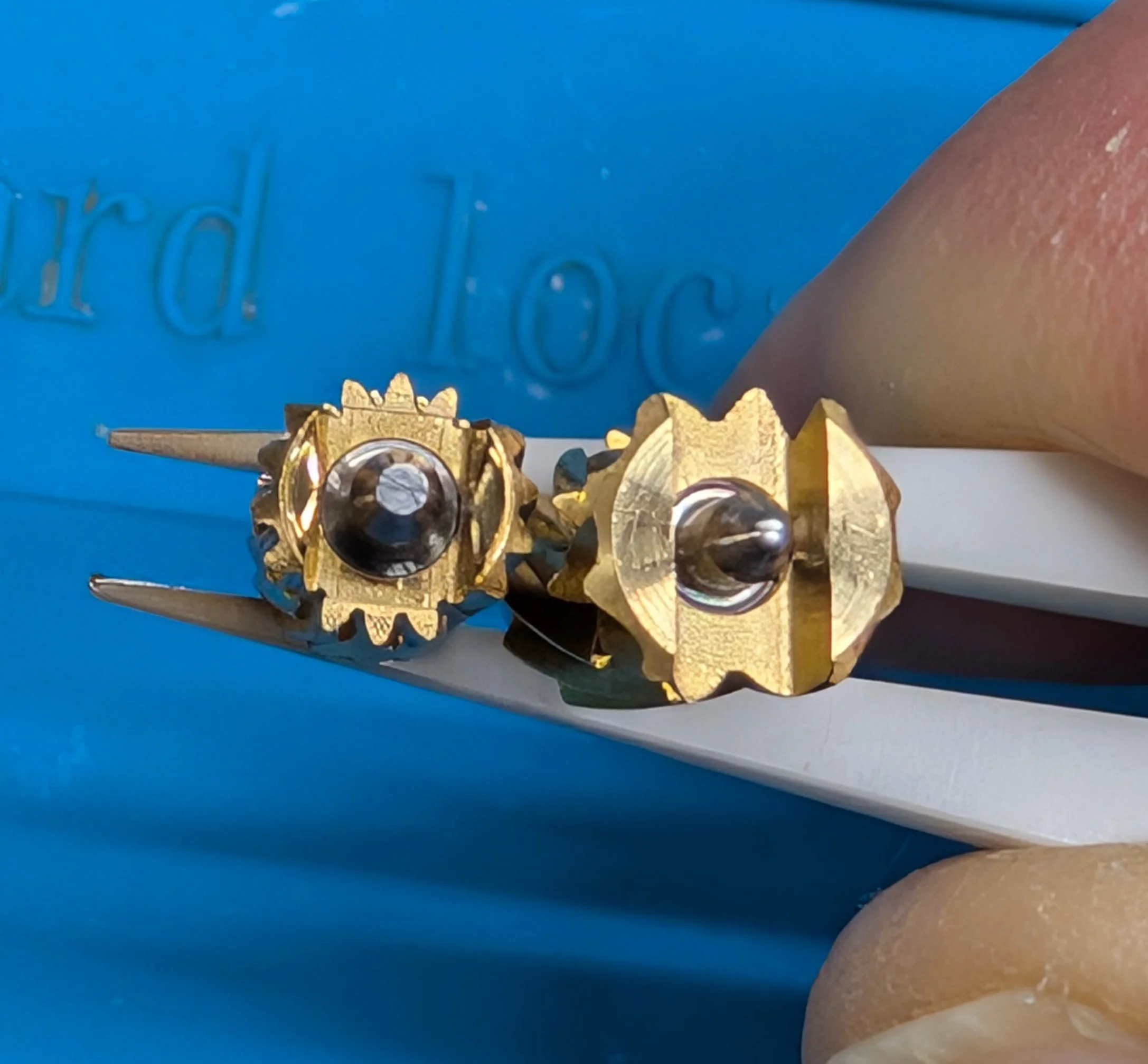
Avail 6.1:1 pinion on the left, Simon’s 6.3:1 on the right
Once the gears are tackled, the next component to look at is the driveshaft. That’s doubly true when speaking in terms of the first 1500C and 2500C models, which have a single pin to kick the reel into gear. With the single pin, one complete turn of the handle is required to get the reel in gear. Later on a 2-pin came standard and required half of a turn, and even later, the 4 pin which takes a quarter turn. Can you see where I am going with this? We want a reel that goes into gear quickly. Most of the models you’ll see for sale will either be a one or two pin. The good news is that Avail makes a 4-pin for these, and the ratchet wheel on the Avail driveshaft is cut in a way that the anti-reverse engages faster as long as you have the accompanying Avail brake plate. If you have a 2500CI or 2500CIAR, the instant anti-reverse models, there is no need to upgrade the driveshaft unless you want the weight savings, as those already come with a 4-pin.
With the drive system out of the way, we can now focus on true weight savings. This is where things can become prohibitively expensive. None of these components are required, but they are definitely nice to have. They will shave considerable weight and in the case of the frame, facilitate ergonomics. At this point we are crossing the Rubicon and putting a $1,000 reel in our hand as these are the most expensive components. Still interested? Good, let’s continue on.
The first component is the brake plate. The Avail brake plate weighs a full 0.6 ounces (17 grams) less than OEM. In the case of the ratchet anti-reverse models, this is a great part to have aside from weight savings. Working in conjunction with the Avail driveshaft, the anti-reverse engages much faster, resulting in less backplay in the handle. With the CI and IAR models, there is less incentive to switch as it would only save on weight. From a functional standpoint, it behaves like OEM and will offer no performance benefit. There is a “gotcha” with the Avail plates however, not all pushbuttons work correctly with it. If your pushbutton has the numbers 1, 2, or 3 stamped on it, congratulations, it will work just fine. If it is not numbered or numbered 4 or higher, the clutch will not return as the pushbutton fits the plate too tightly. The non-numbered pushbuttons were used in the first few runs of the 2500C, while those stamped with the number 4 were used on the 3500C and some later 2500C models. If you have one of those, you can simply buy the Avail pushbutton and it will work just fine.
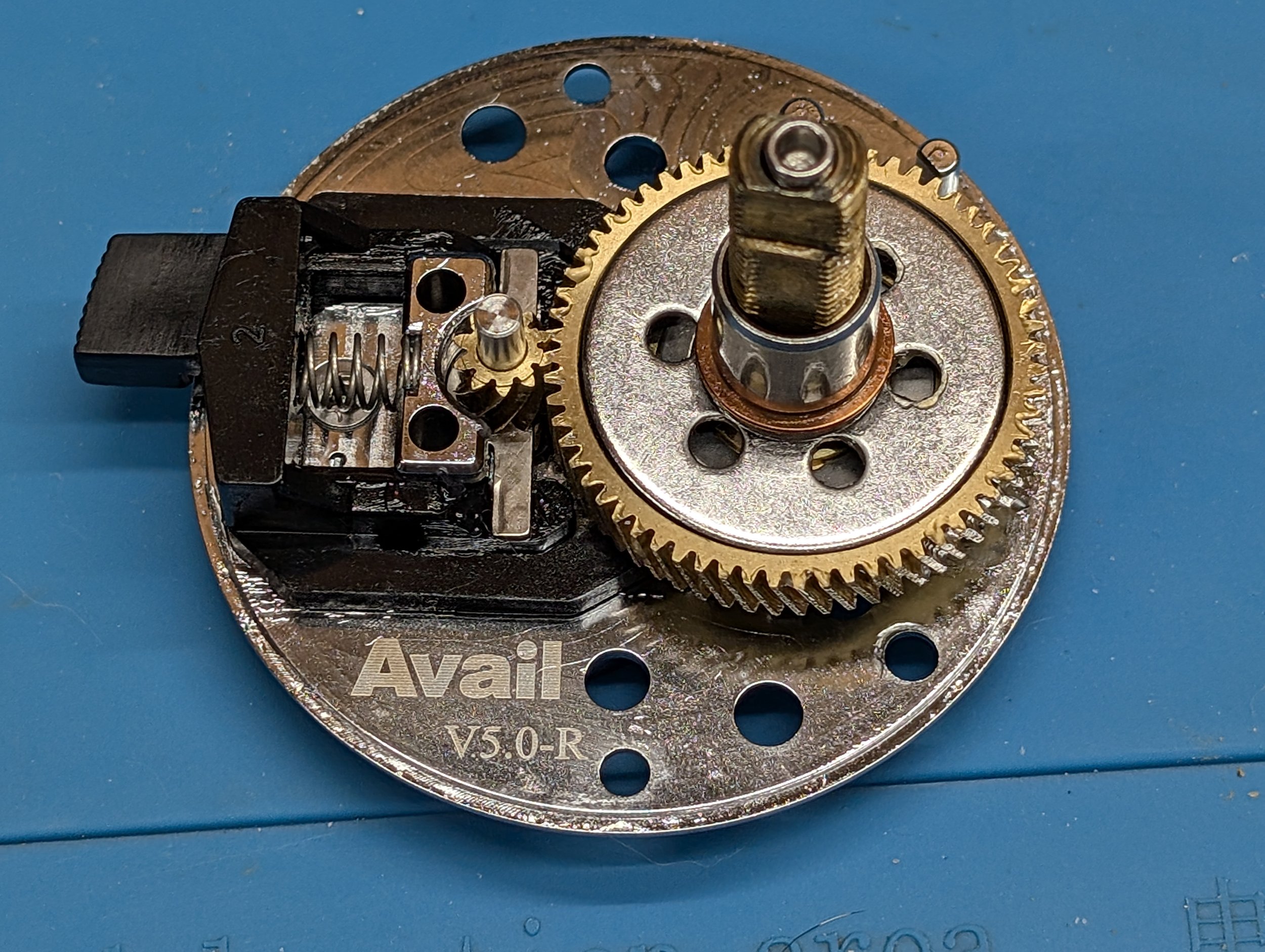
Avail 2500CIAR brake plate with Simon’s gears
Lastly, the frame. This is where big weight savings and better ergonomics come into the picture. The first frame I will discuss is the Avail 7.5mm offset frame. Having used them for a few years, they’re very light and make the reel palm much better. This frame will remove ¾ of an ounce from your reel. Paired with the brake plate, we are looking at removing 39 grams total, or 1.375 ounces. That’s a massive savings and will put the reel in line with other modern reels. The primary shortcoming of the Avail frame is that it feels quite flimsy and doesn’t feel like it would hold up to the repeated abuse of bass fishing or fishing for large migratory trout. It’s a multi-piece frame which may possibly distort under pressure. The good news is that none of the pillars are riveted, which makes it easier to re-align in the event it goes out of square.
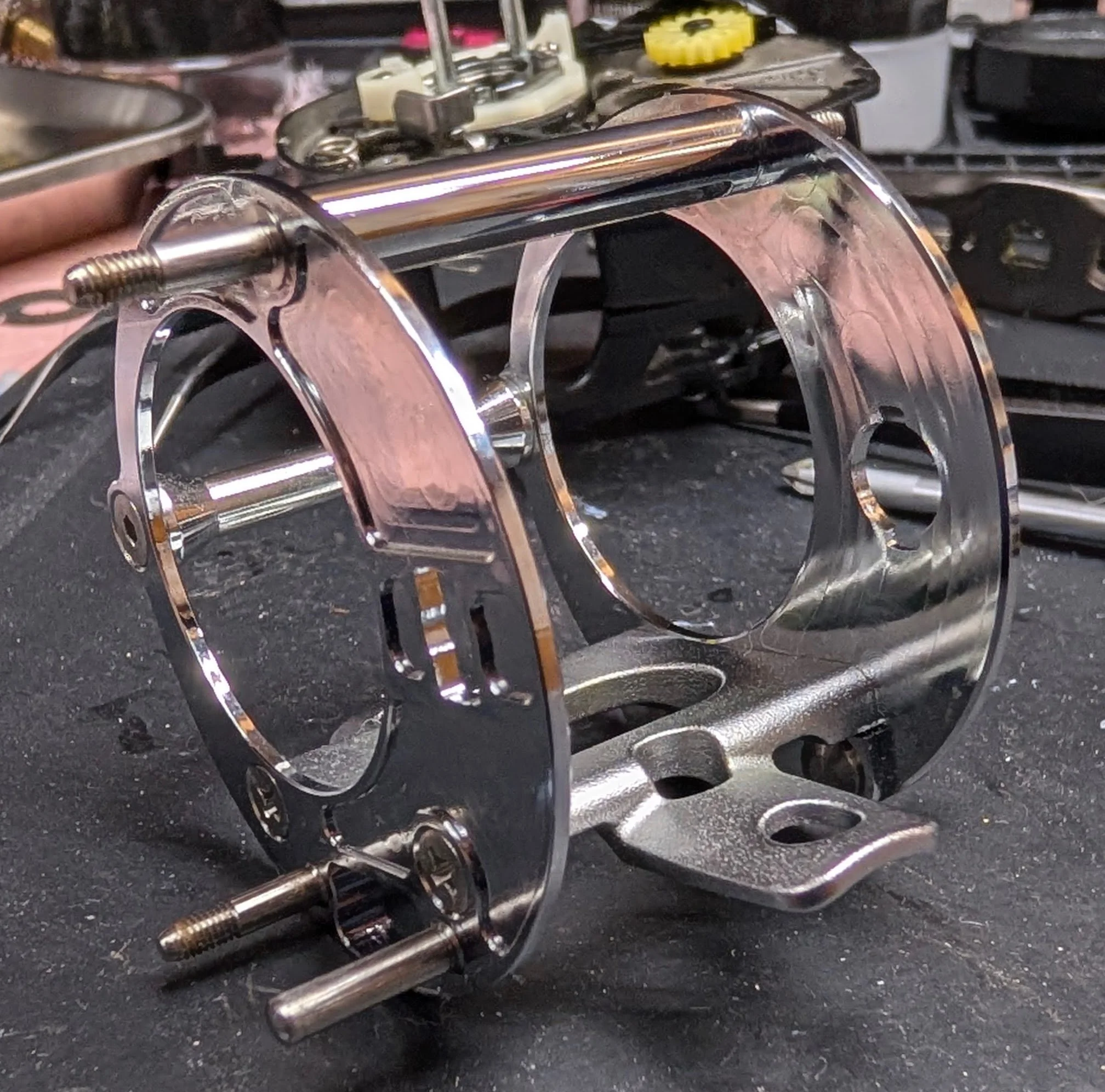
Avail offset frame, note the machining marks
Continuing on with frames, another good choice is Simon Shimomura’s frame, which was designed in conjunction with Isuzu Industries. This frame is offset by 2.3mm, so it doesn’t lower the reel as much as competing frames. From an aesthetic point of view, this is as beautiful as it gets. Simon manufactures perfection and his strict standards ensure you will get the highest quality every time. Not only is this frame significantly lighter than OEM, it has structural improvements to make it far less likely to distort; such as thicker foot pillars and a revised thumb rest which effectively toughen the frame. While I have no direct experience with this frame, many I talk to do and glow about it. Not one is unhappy, that should tell you all you need to know. This is as good as it gets. If I were to be nitpicky, my only knock against it is that it doesn’t sit as low as the others. That is on me, as Simon generally creates components that retain factory aesthetics while improving their functionality at the same time.
The last frame out there is by AMO in China. This frame truly modernizes the reel as it’s a one-piece bar stock design. This means there is virtually zero chance of it going out of alignment. A misaligned frame is the crux of every Ambassadeur, the biggest performance robber there is. While it does weigh about 7 grams more than the Avail frame, it more than makes up for it in rigidity. This frame means business. It sits slightly higher on the reel seat at 7mm, just half a millimeter higher than the Avail. The reel foot itself is longer, much like a modern Shimano so it may have trouble pairing with some rods that have short seats. What else is nice about this frame is that it has a removable bracket for the worm gear, which cuts down the risk of broken retaining clips come cleaning time. If there is any drawback to the AMO frame, it’s the quality of the machining. There may be machining marks present, but honestly, they are far less numerous than what you’d get with an Avail frame. Other than that minor quibble, this is the one to get if you are after a more modern look.
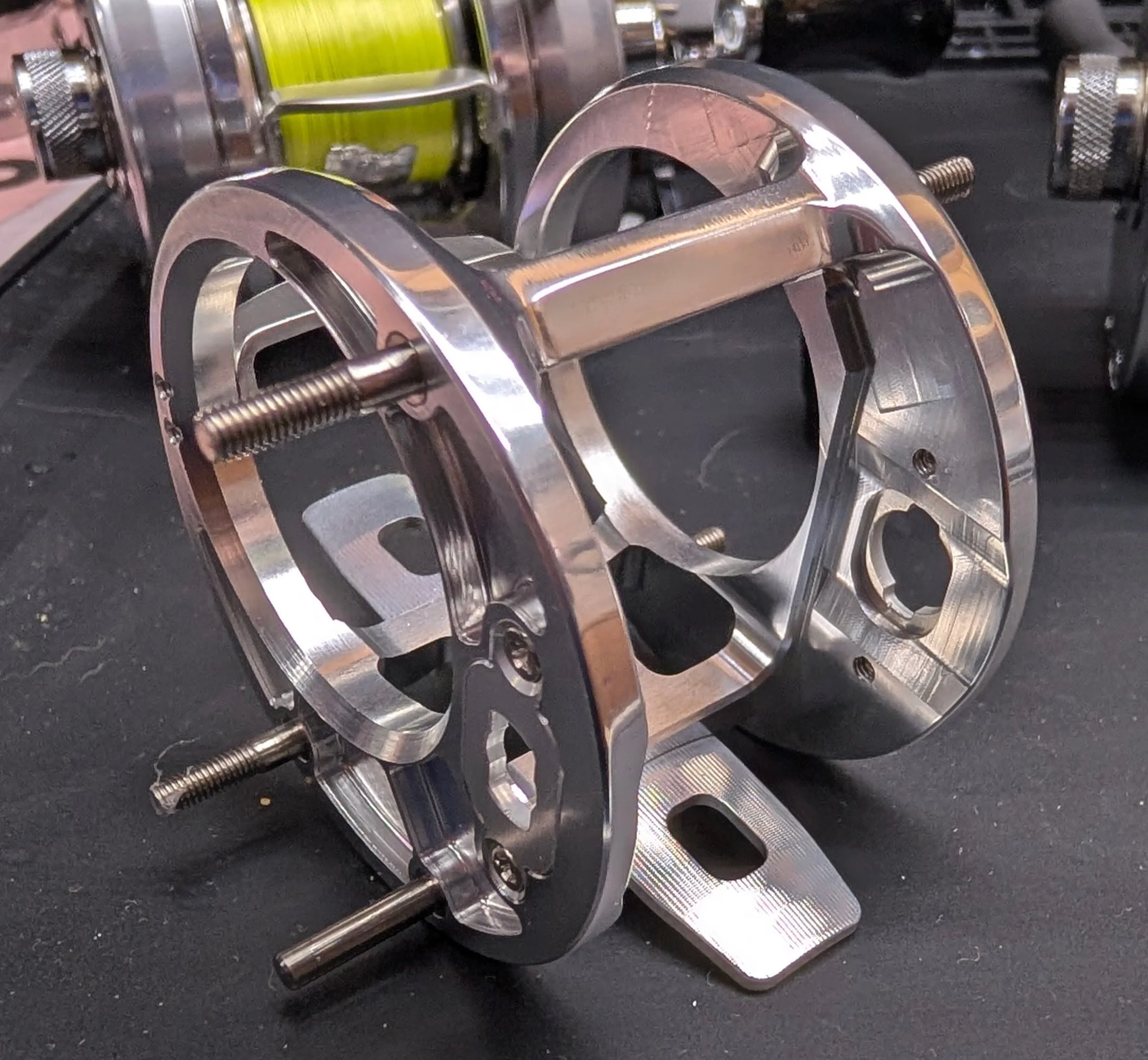
AMO bar stock frame
Now that your wallet is trembling in fear, what do you get with all of this? A reel that’s faster, reasonably light, and more comfortable to hold. Depending on the handle and star wheel chosen, it’s possible to have a 2500C that tips the scale anywhere from the high 5 ounce range to low 7 ounce range. This is a big drop from the original weight. Simon’s frame as well as AMO’s when paired with the 6.3:1 gear set make for a very formidable reel that put it in line with modern offerings in structural strength, speed, and drag capabilities. By the time all is said and done, it’s quite easy to drop $1,000 or more building out a 2500C, but in the end you have something that will last many years with replacement parts available for the long haul. These aftermarket companies keep the spirit of the small Ambassadeur alive, picking up where Abu Garcia abandoned the platform in favor of their Revo. What a mistake that was. The Revo is a decent reel, but everything about it is not Abu Garcia. This is what happens when bean counters take the helm instead of craftsmen and engineers. As always, happy fishing!
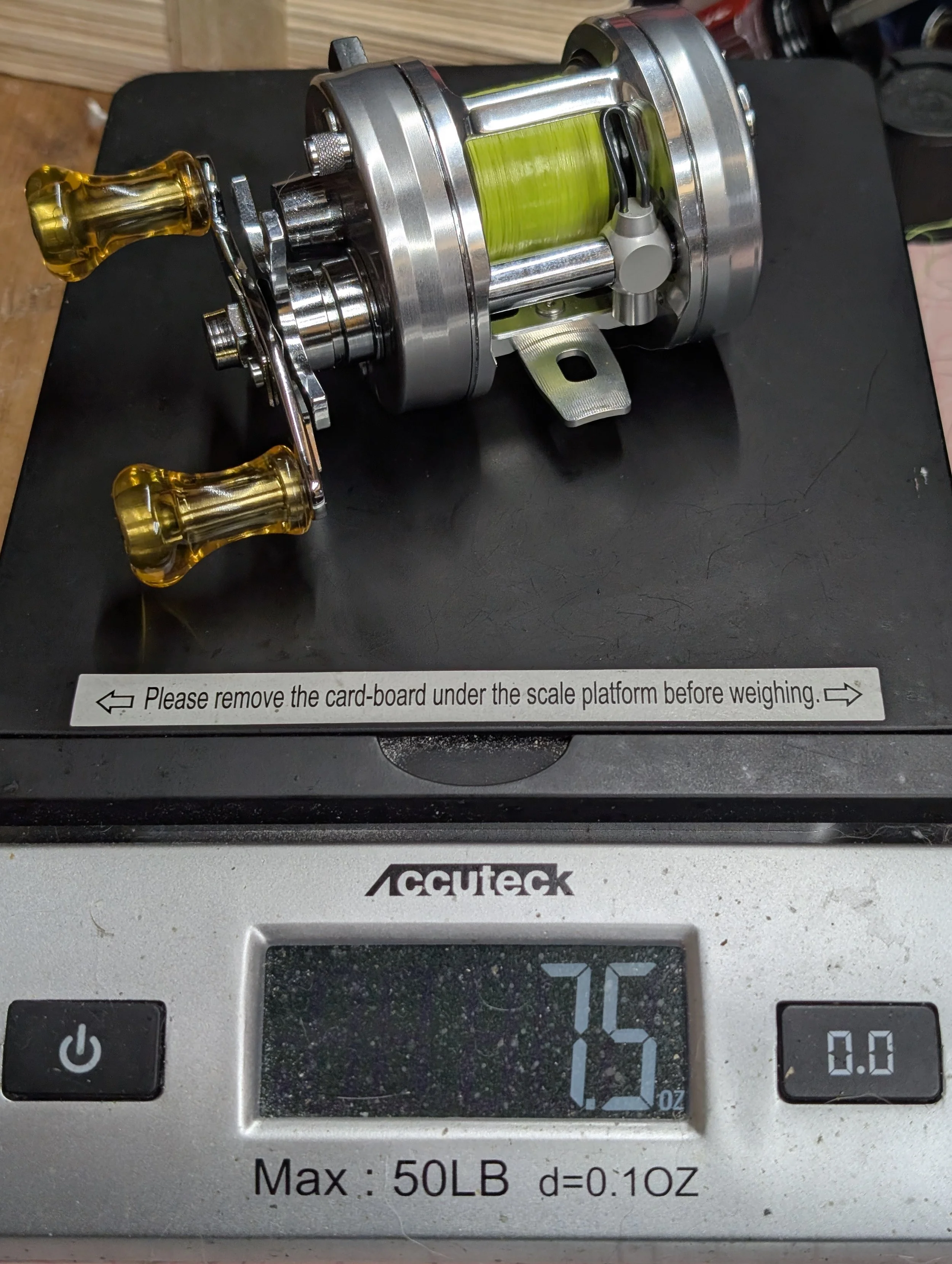
A near 2 ounce weight savings. It would be much more with an Avail handle and driveshaft