
the red reel
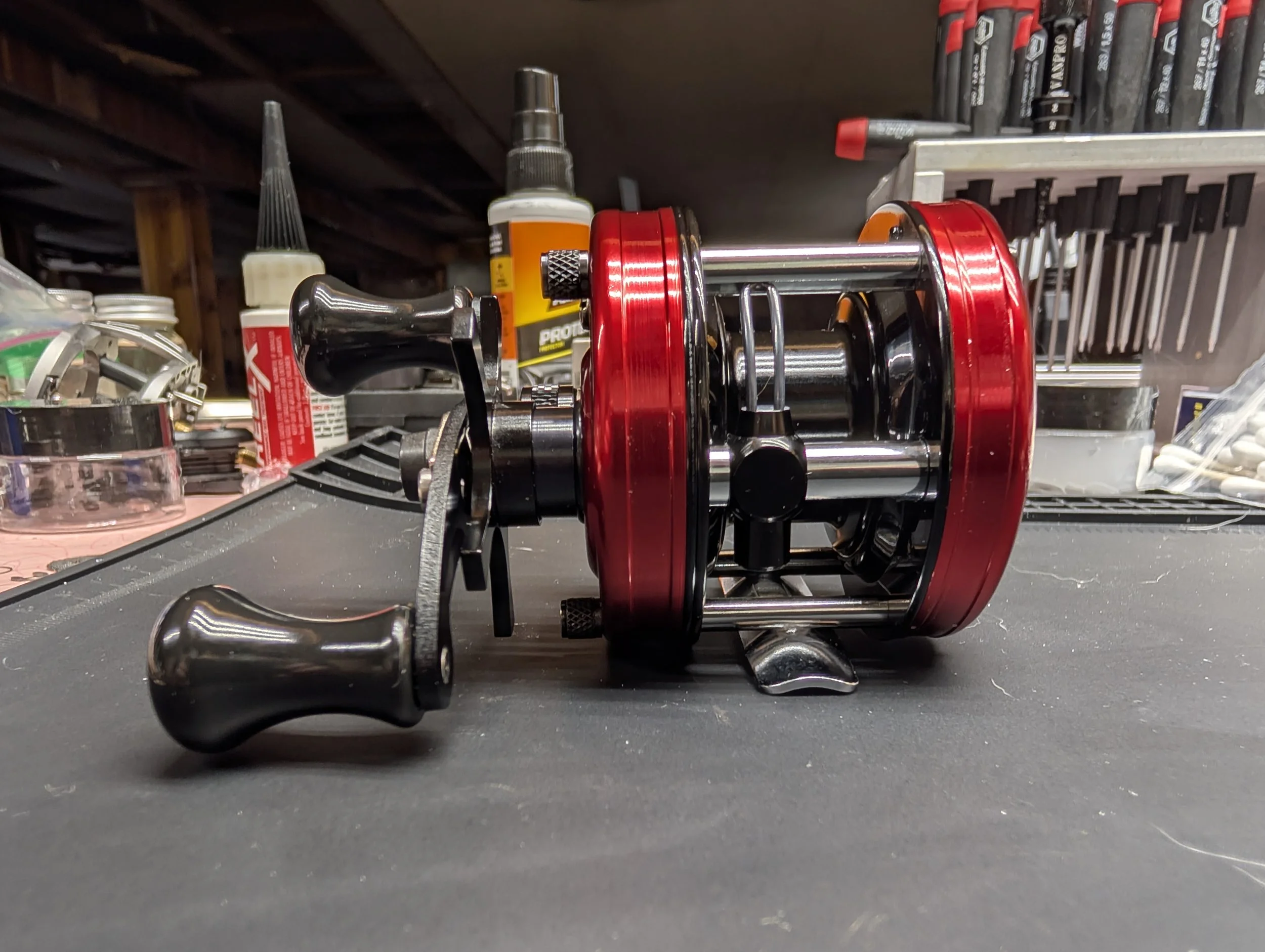
If looks could kill
If there’s any color that brings out the spirit of the Ambassadeur, it’s red. Red was the color of the original Ambassadeur released in 1952 and it would seemingly forever be the defacto color on many 5000 models throughout the production run, which ended in 2025. Being that I’m a nerd for the 4500 size as well as the Ultracast design, I set out to build perfection. Something with the clickity clackity goodness of a reel that touches the soul and lets you know exactly what it is doing based upon the music it creates. The baritone sound of the gears meshing, to the soprano-like voice of the spool spinning when reaching for the horizon, tells you exactly what it’s doing. Like driving a car with a manual transmission, you listen to the rhythm and know when to pull the lever into the next gear. An Ambassadeur is very much the same; the song tells you when to thumb it and how much pressure to give so the spool remains tame. Please do not mistake noise for lack of smoothness, because this thing is smooth. These older reels with their stamped parts do not contain noise nearly as well as modern CNC machined models from the likes of Daiwa and Shimano. That bar stock aluminium really quiets things down. Both a blessing and a curse.
When I set out to build this, my end goal was to create something reminiscent of the Ambassadeur 4500AL, a red and black masterpiece that was on the market from 1981 to 1986. These were pretty famous reels in their time, but as such, are now a relic of history primarily cherished by those who still own one or used to own one. The younger generation isn’t familiar with them, for very good reason. They came up in a time when the round baitcast reel was seen as dad’s or grandpa’s old mule; not capable of high performance but something that would surely catch fish. They had the sleeker and more palm friendly low profile models which really didn’t gain traction until well into the 1990s. As it is now, I occasionally see a younger fisherman ask questions about the Ambassadeur, and believe it or not, a good amount think they are trolling reels. I understand them, because many trolling reels still retain the round profile so it is easy to draw that conclusion. Once they are shown the realm of possibilities of the Ambassadeur, they want their own. Especially the 1500C and 2500C models as they are very popular with the bait finesse and mountain stream fishermen. It’s almost as if they have been let in on a secret withheld from them by the modern fishing tackle industry. Round reels always have been and always will be the statement pieces put out by reel manufacturers, showcasing their prowess in design and manufacturing. The aesthetics are timeless, whether the reel was manufactured 50 years ago or last week. Ambassadeur and Morrum from Abu Garcia, Millionaire and Ryoga from Daiwa, and the Calcutta Conquest from Shimano all withstand the rest of time, both in looks and functionality. They are the epitome of fine craftsmanship, and while low profile reels are also beautiful, it is very easy for them to appear dated. Ergonomics over beauty. Where low profile reels are built on planned obsolescence, round reels are built on charm and classy aesthetics.
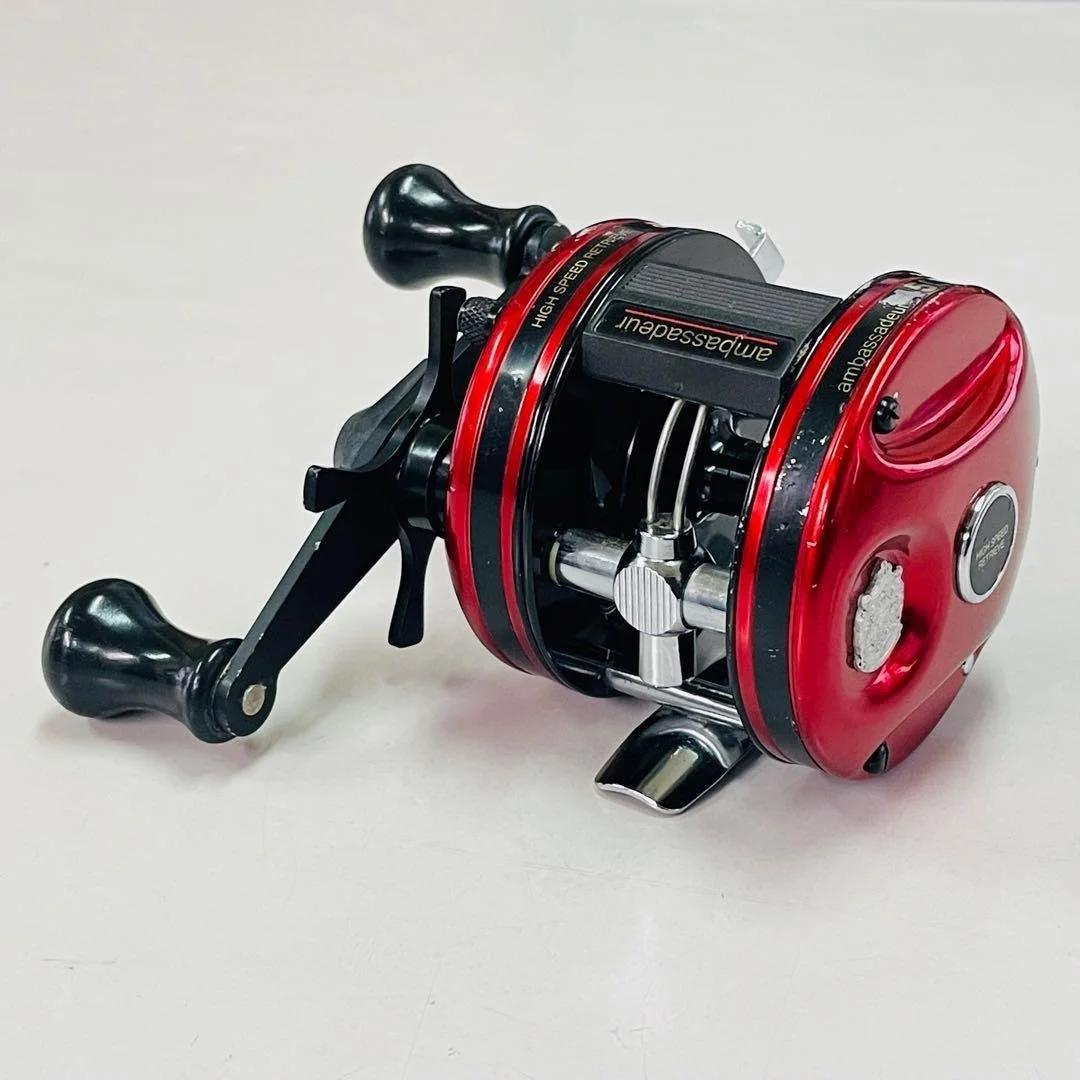
A 1986 4500AL, the look I was going for.
Continuing on with this build, I chose the 4500 (again) just because it’s my favorite size. While not perfect for any one technique, it covers most all of them quite well. I could go toss hardware for steelhead with it, I can take it bass fishing, or I can hang at the pier and pick off whatever is enticed by my offering. Why a 4500 and not a 4600? Easy, I prefer the reliability of the push button clutch. It’s simple, consistent, and is easy to replace if something goes awry. That’s purely preference on my end as both will perform the same assuming the spool and internals are the same. There is one peculiarity with this reel, the brake plate. I purposely used this brake plate due to its simplicity and consistent performance. This is also the same brake plate used on both early Ultracast models and its predecessor with spool bearings located in the side plates. I like the way it performs; the return springs snap the clutch into gear like a mousetrap. The somewhat loud release lets you know you’re back in gear. Remember those noises I talked about previously? This is one of them. It’s satisfying and adds to the soulful feel of the reel. If this plate was made with the longer driveshaft stud to accommodate an anti-reverse sleeve, I’d run it in every build. It’s that good, seriously. Where it may fall short of the newer models is drag capacity, but that will only matter to some. These old two disc setups are good for about 8lb of drag as stated by Abu Garcia, while the newer models have double the drag discs and are rated to 15lb. While 8lb doesn’t sound like much, understand that if you follow the golden rule; setting your drag to 1/4 the breaking strength of your line, 8lb is plenty and many all tackle world records were set with the Ambassadeur. The exceedingly high numbers we see in models today are grounded more in marketing than reality. Sure, they put up some impressive numbers, but on the water, that doesn’t matter so much if you know what you’re doing. Setting the drag correctly is somewhat of an art form. If you do it by feel, you are only lying to yourself. Do it right with a scale and you will be properly rewarded.
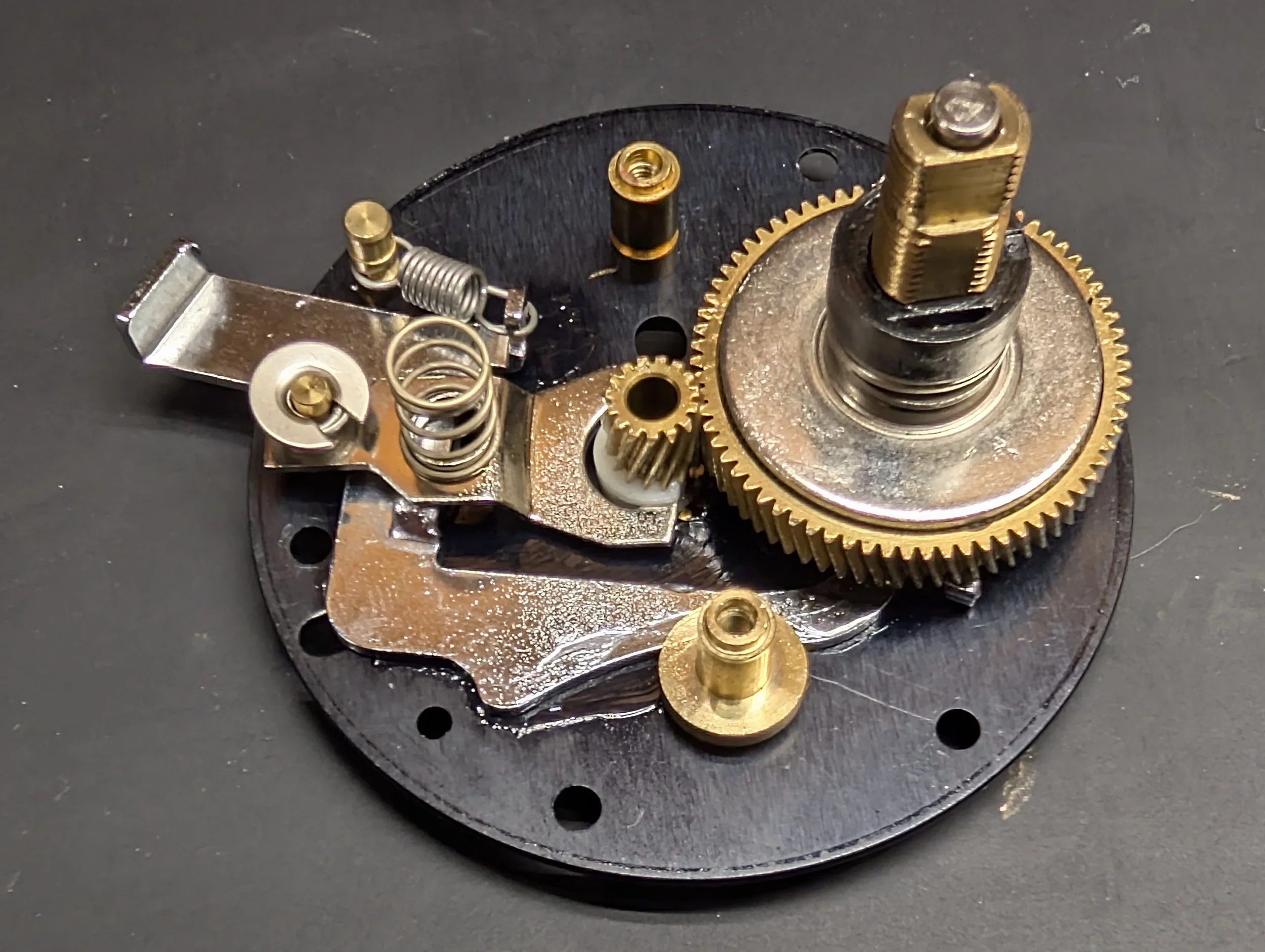
The 1980s brake plate, simple and reliable.
Abu Garcia used that brake plate until 1991, then they transitioned into an arguably smoother setup employing leaf springs and a more complex clutch system, but it lost its soul. What used to clack when the clutch returned transitioned into a gentle thud. The clutch return would become softer, and one caveat is that every so often, the clutch will hang as the pinion can sometimes get hung up on the axle. This is due to the new pinion gear having a smaller diameter bore which is tighter in tolerance in relation to the axle. While it works 99% of the time, it lacks the consistency of the older style plates. In Abu’s perpetual pursuit in achieving the smoothness of competing models by Daiwa and Shimano, they kind of lost their soul to some degree. This is why models from the Classic Era are most desirable; those made until ~1981. What’s nice about the brake plate employed in this build is that it’s a simple mechanism, and quite effective and consistent. It works every single time.
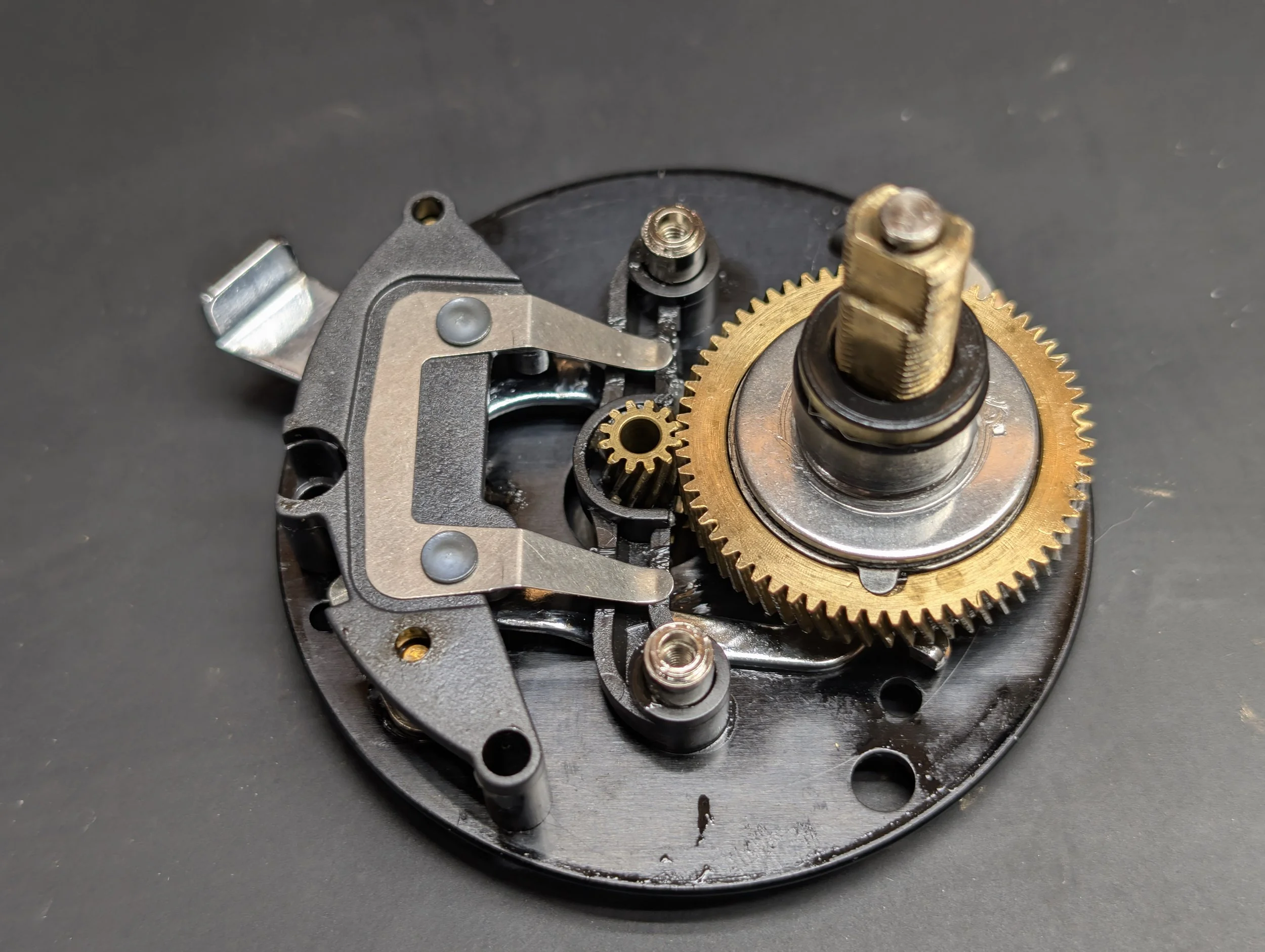
The more contemporary brake plate. This would be used from 1992 until the end of production of the Ambassadeur in 2025.
To get my red reel, I started out with a pair of mint condition ‘89 Ambassadeur 5000 side plates, the very first year for the Ultracast architecture and a very sweet shade of red. The price was right and off I went in search of a frame. As luck would have it, I found a new old stock frame for an ‘86 Ambassadeur 4500C, found the required brake plate and associated components, and I had a complete gearbox. I also installed a carbon drag which will be run dry for more bite. Remember, this thing is a winch and a dry drag ensures I can keep the heat on fish that make short surges. If the primary goal of this reel were salmon or steelhead, I would opt for a greased drag as those fish have more steam and like to make much longer runs. I typically run my drag greased, but this was an exception to my own personal rule. I often run my drag on the lighter side anyway and put my thumb on the spool if I need a little more.
The rest of the build is my usual suite of parts from Avail and Haneda Craft; a 70mm handle, black star wheel, 2 bearing level wind, lighter line guide, and 2 bearing cog. If you’ve read my previous article about the 4500CS, it uses a shallow Avail 4530 spool, which is 3mm deep and intended for fine braid. This time around, I went with the deeper 4550 spool since the goal was to run a more standard diameter braid. In this case, I went with 120 meters of #1.5 (0.205mm), rated to break at 24lb. My intended purpose for this reel is fishing small to medium sized plugs and soft plastic swimbaits. While the 4.7:1 gears may sound slow, they still bring in 21 inches per turn, and the 70mm handle will help facilitate a faster retrieve due to the shorter throw. To top it off, I specifically sought out a ratchet anti-reverse setup. While the handle does have a little back play, it makes up for it in durability. Besides, I was going for old school, and a ratchet anti-reverse does it. These anti-reverse dogs are much cheaper and easier to replace than a one-way roller bearing. I’m not a stickler for handle back play and value longevity over smoothness anyway. To me, that takes away from the soul of the reel itself. The goal here is to build a classic, re-imagined.
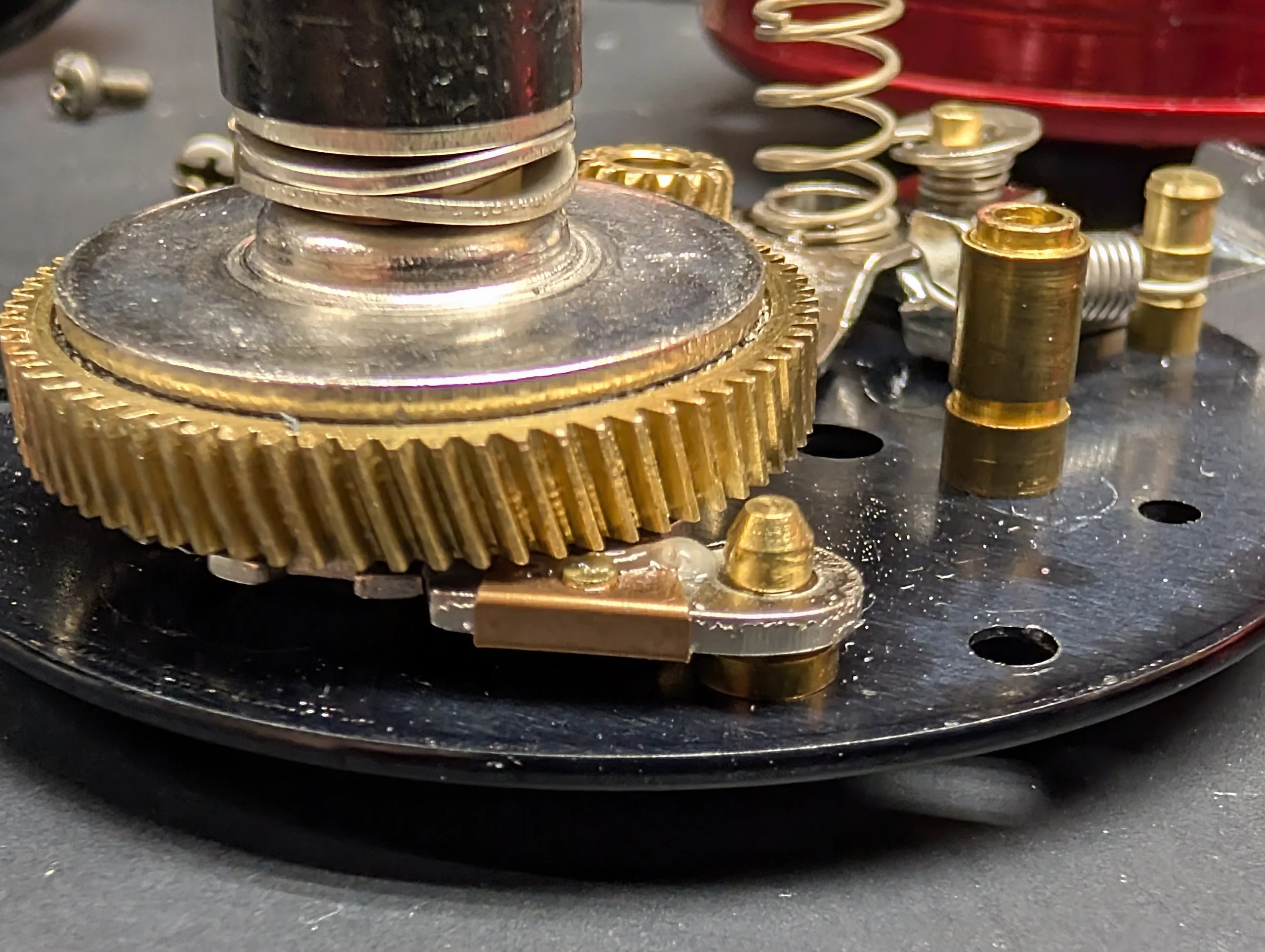
The anti-reverse dog. It catches the ratchet gear to keep the handle from spinning backwards.
What do we get with this? Soul of course. Something nostalgic, yet high performance with the modern lighter weight rotating assembly. It makes all the right sounds and largely behaves like what it was meant to replicate, but by far more capable. Make no mistake, this is a highly efficient fishing machine. In an era where the game is to increase bearing count, decrease weight, and increase drag capacity, it’s refreshing to fish with something from days gone by. Comfort food for the fisherman, if you will. Low profile reels are great in their time and place, but round reels will always offer something they don’t. Never forget where you came from.
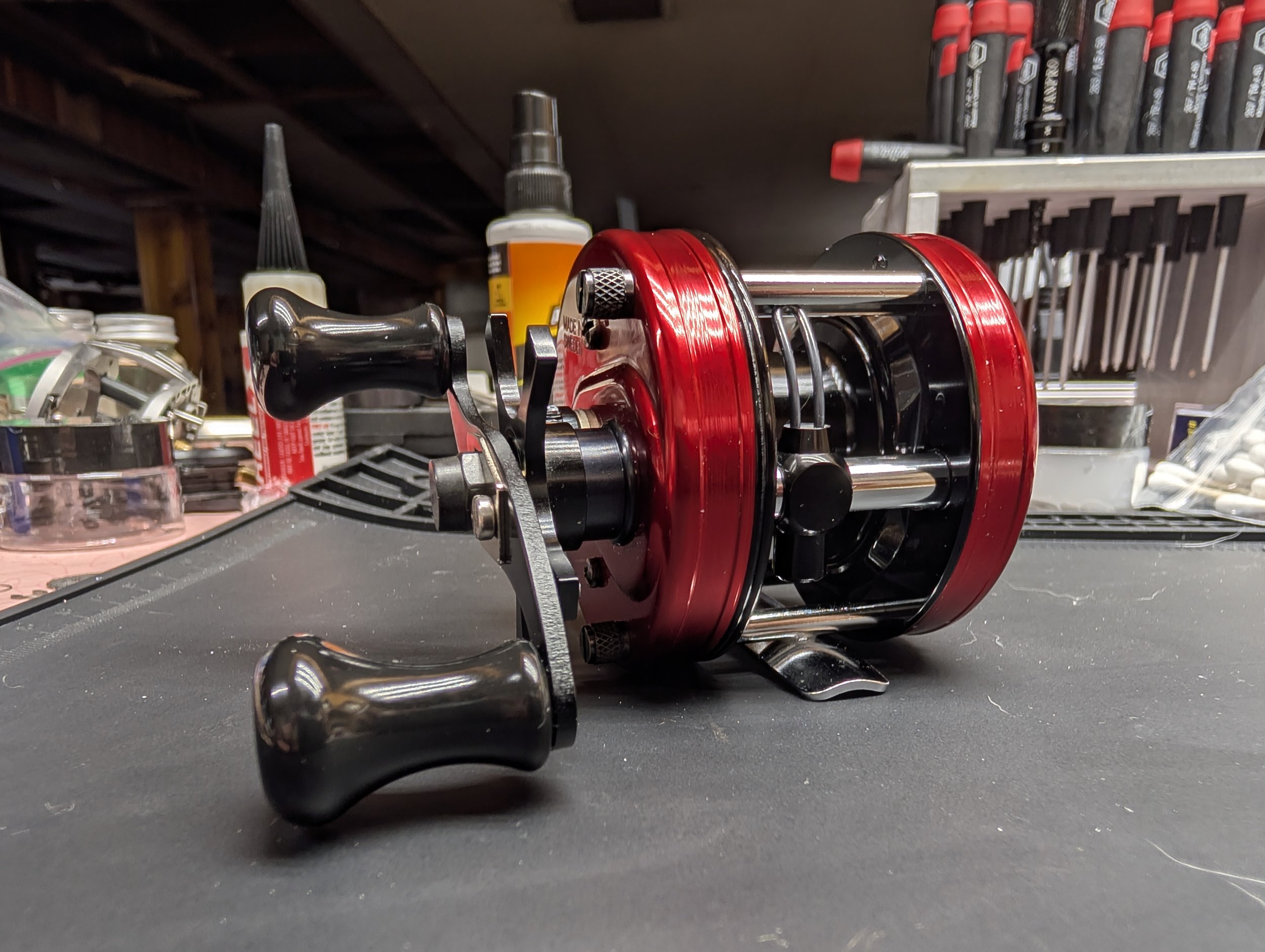
The “modern” 4500AL. Perfectly light lure capable.