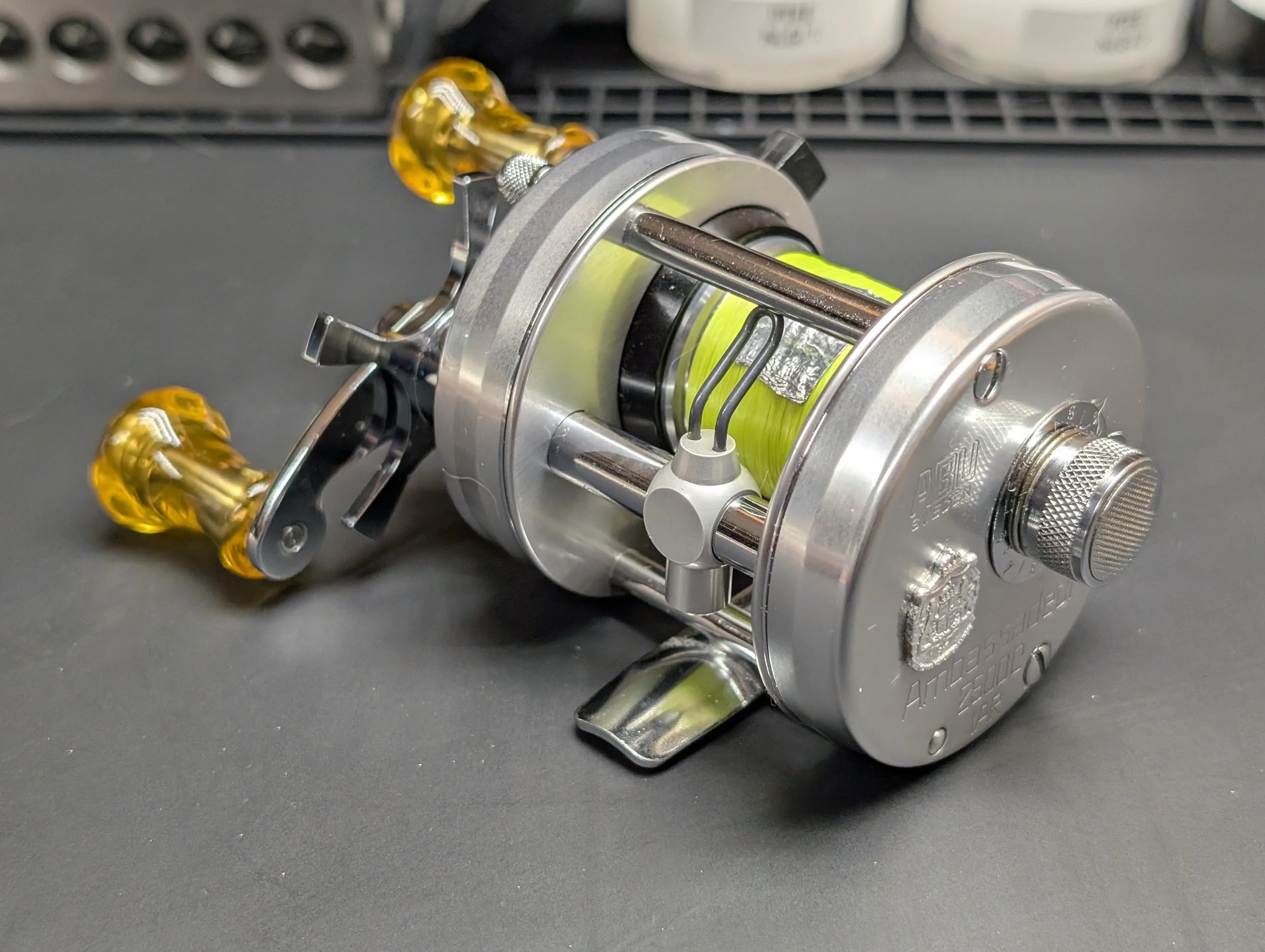
a freak in the creek, the ambassadeur 2500c
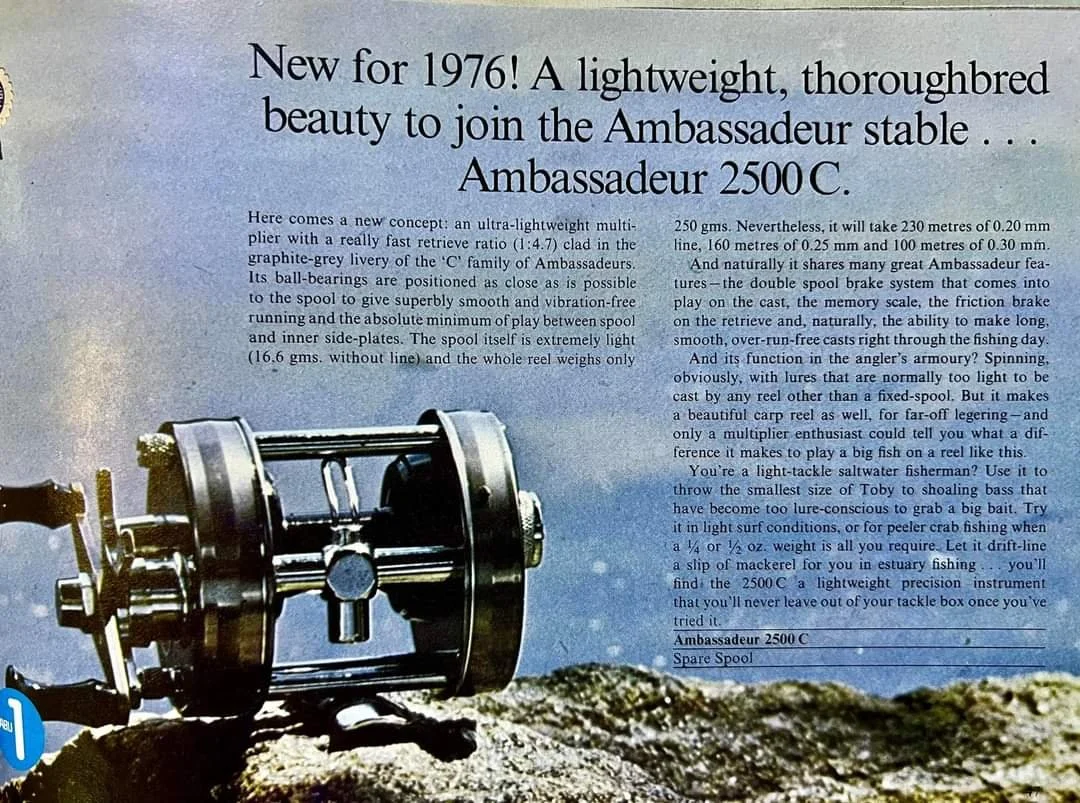
The debut of the ABU 2500C
In the world of bait finesse fishing, there is no reel that tugs at heartstrings more than the venerable ABU Ambassadeur 2500C. For many, it’s the holy grail, for some others, it’s an antiquated piece of fishing technology overshadowed by the latest and greatest from Daiwa and Shimano. It’s bulky, heavy, noisy, and slower than molasses in January, so what is it that draws people to the small Ambassadeur? In factory form, the 2500C weighs about 9.3 ounces, a behemoth compared to light lure reels today. The latest finesse round reels from Shimano and Daiwa weigh right around 7 ounces +/-. The slow 4.7:1 gears bring in 16” per turn, and in the IAR (instant anti reverse) models, the 5.3:1 gears are good for up to 18” per turn. The drag, while not stout by any means, is not particularly weak either, good for up to 6lb or so, just a few pounds shy of the new stuff. That’s plenty of drag capacity for fishing a variety of smaller to medium sized freshwater species, especially stream trout. This is what makes the small Ambassadeurs special, they are a blank slate ripe for the tuning. Whatever your goal may be, a plethora of parts is available to build exactly what you want or need.
Today, I am going to discuss baseline upgrades for stream trout use. I will lay out a foundational upgrade path so that you can get your 2500C effectively casting lures in the 2g to 11g range. The same logic will apply to those looking to build out a 1500C. The parts below are exactly what is needed for the rotating assembly to be light lure capable, without any extras such as a lighter weight frame, brake plate, or faster gears. Many users of the 2500C are perfectly content with these essential upgrades while others will want to lighten the reel and speed it up at some time in the future.
The first part of the equation; the spool. In factory form, the 2500C spool weighs a hefty 18 grams. Lightweight for 1976 when the reel debuted, but far overshadowed by newer models today. At the time of release, the 2500C was touted for its capability to cast 7 grams of weight, in the same realm as the then new ABU Cardinal 3 spinning reel. With this build, I went with an Avail 2520R spool. In Avail nomenclature, 25 indicates the spool is for a 2500C, and the 20 indicating depth which is 2mm in this particular model. If your reel is a 1500C, the same nomenclature applies, 1520 (2mm depth) and 1540 (4mm depth). While monofilament or fluorocarbon can be used, these super shallow spools are designed for thin polyethylene braided line, or PE as it is also called. This one is spooled with 50 meters of 0.8 line, with a diameter of 0.148mm and a breaking strength of 16lb. Sounds hefty for trout, but keep in mind this PE line is the same diameter as 2lb monofilament. With a weight of 5.7 grams, the 2520R is one-third the weight of the OEM spool and much better suited to light lures. A little trick I like to do is secure the spool pinion and bearing to the spool shaft with a 1x2mm O-ring. It holds everything securely and your pinion nor your bearing will come loose. In factory form, there’s a cup in the palm side plate that houses the pinion, potentially creating a source of friction. When components are attached to the spool, this can be removed and stored away. This also makes servicing the bearings much easier, as the spool, pinion, and bearing all pull out as one unit.
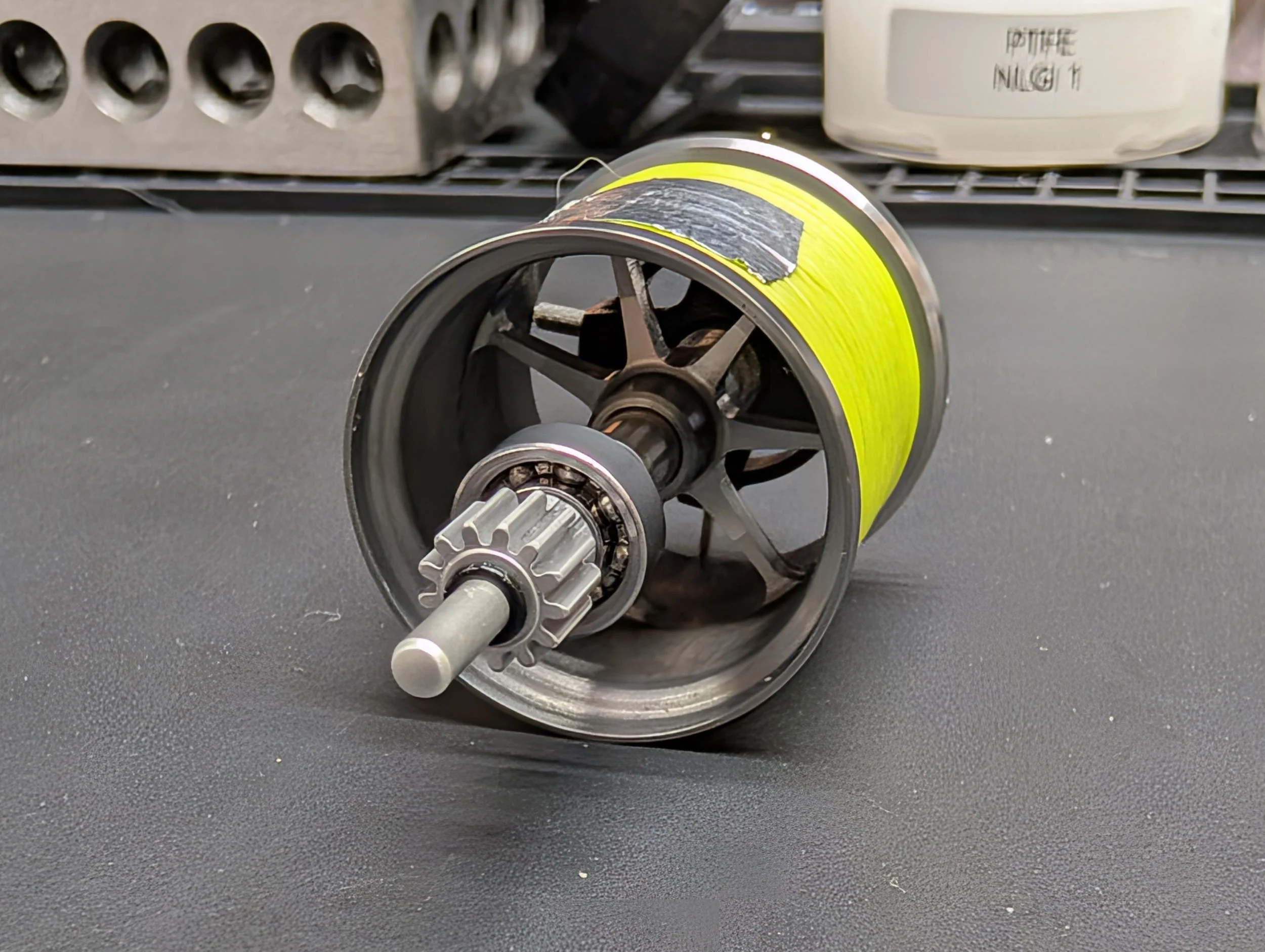
Bearing and pinion secured to the spool makes for less friction
Braking is super simple. With such lightweight components, braking can also be less aggressive. My preference is for a single XS (extra small) brake block, which provides enough control that casting will be highly effective, yet free enough to cast considerable distance if desired. With zero end tension, the reel won’t backlash unless your lure hits the water before your thumb graces the spool. It doesn’t get much easier than that, a very set and forget system. You may also opt for a static magnetic brake such as the 1520 or 1520PE (tailored for braid), but this will take more trial and error as you search for a combination of magnets that suits your casting style best. There is no superior choice; centrifugal or magnetic brake is completely up to you. The idea is to build a reel that is both highly capable, yet user friendly. The braking system chosen should be tailored to one’s own personal style of fishing. If going with a magnetic brake, dial it in with the lightest weight one intends to cast, then anything larger will cast trouble free as well.
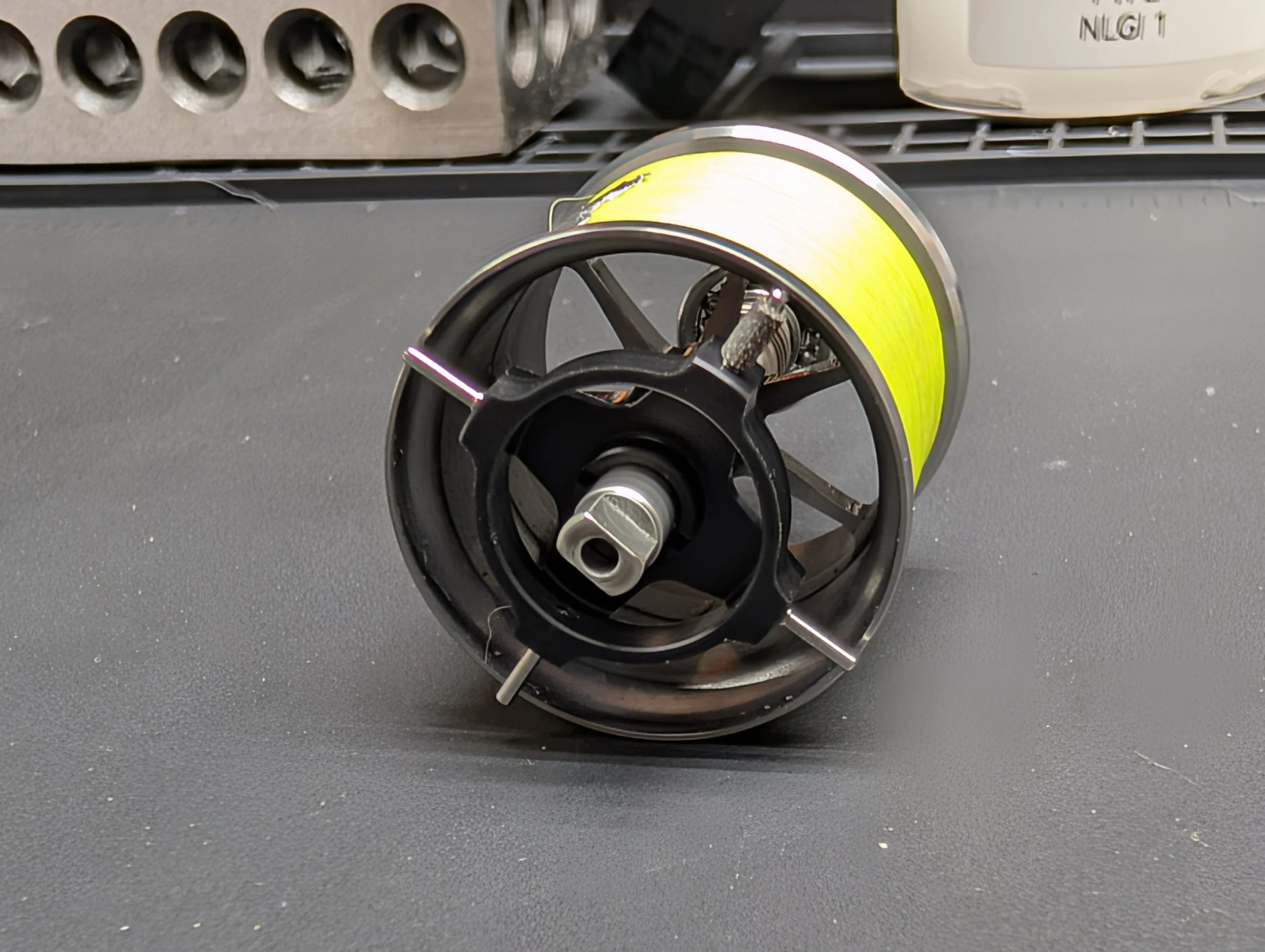
Avail 4-point brake. Original ABU 2-pin is sufficient with the OEM brake plate.
The next part of the equation; the level wind. A lighter weight two ball bearing unit such as the Avail WS-25C-2BB will further lighten up rotational mass as it is much lighter than the steel level wind used from the factory, and also sports a pair of ball bearings. To compliment, a lighter line guide should also be used because after all, this is a synchronized level wind. The level wind moves with every cast, and the lighter it is, the better the rotation, and the better for the potential of light lure fishing. Leaving the factory bushing level wind intact will not lower start-up inertia as it takes more energy to turn, thus robbing the spool of rotational energy.

The complete level wind assembly, leaner and meaner
Rounding out the build, a two ball bearing ported cog wheel. This also decreases start-up inertia and ties the spool to the level wind. With all three working in unison, your rotational mass is now minimized to the point that start-up inertia is minimal, allowing you to cast lighter trout-sized lures with ease and pinpoint accuracy. These Avail cog wheels come with a couple of shims that can be used to tune out slop, so put one or two in place if need be.
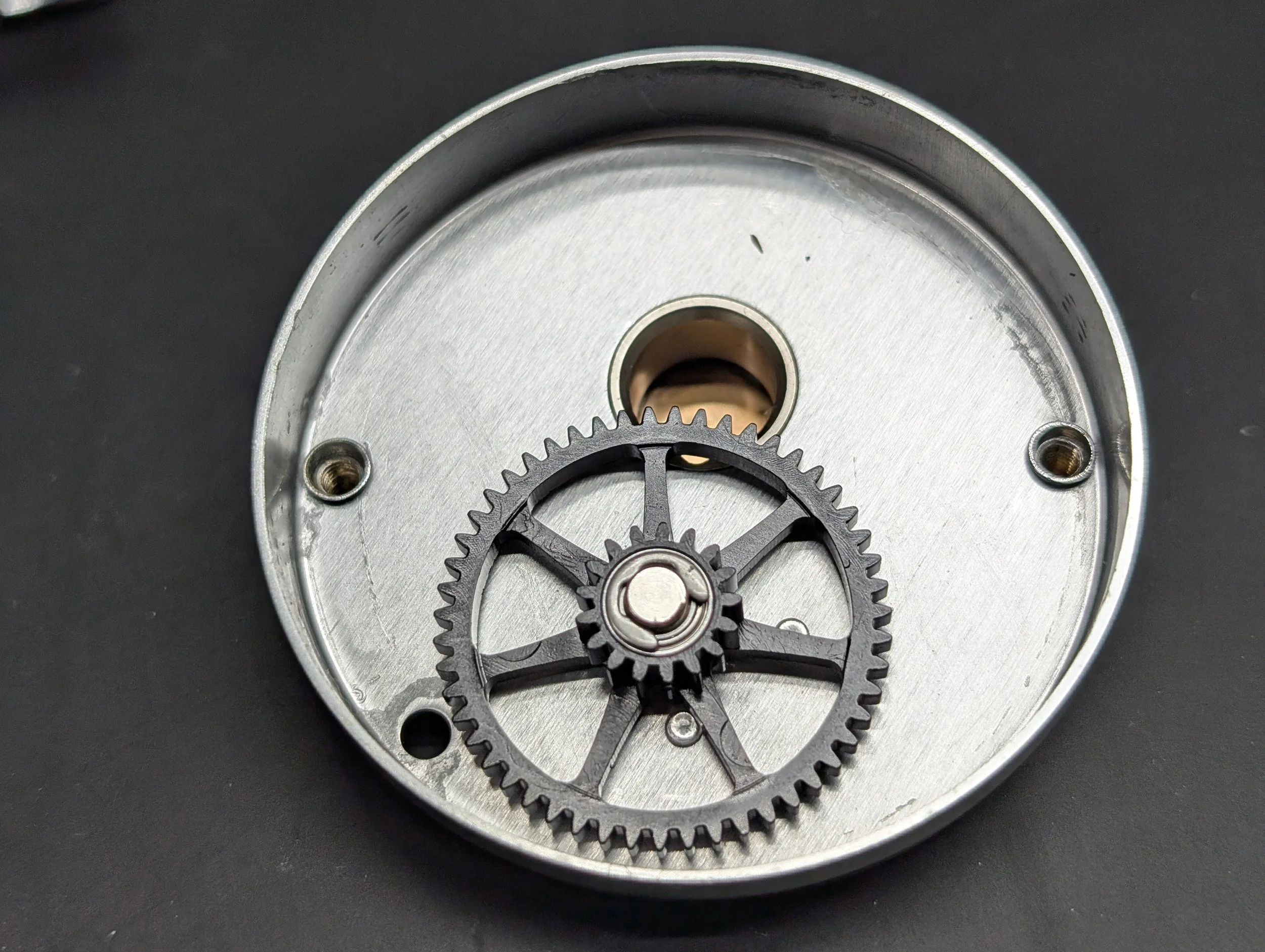
Avail 2BB cog wheel
Lastly, the spool bearings. While some may want to use Hedgehog or ZPI ceramic hybrid bearings, excellent quality stainless bearings such as NMB or NSK are very good, readily available, and make for a very capable reel. Lubrication with all bearings and the level wind will need to be low viscosity oil, and should be replenished every few trips just to keep them moving at their best. Good stainless bearings do not cost very much and when thoroughly cleaned and properly lubricated, spin better than the fly-by-night products offered to us reel nerds. Bearing choice is up to the end user, so experiment with your heart’s content. There are plenty out there to choose from; some very hyped, some sleepers, and some that have such a solid reputation the world over that they produce great quality every time. When in doubt, seek out bearings from a German, Japanese, Swedish, or American manufacturer. You will get great bearings every time.
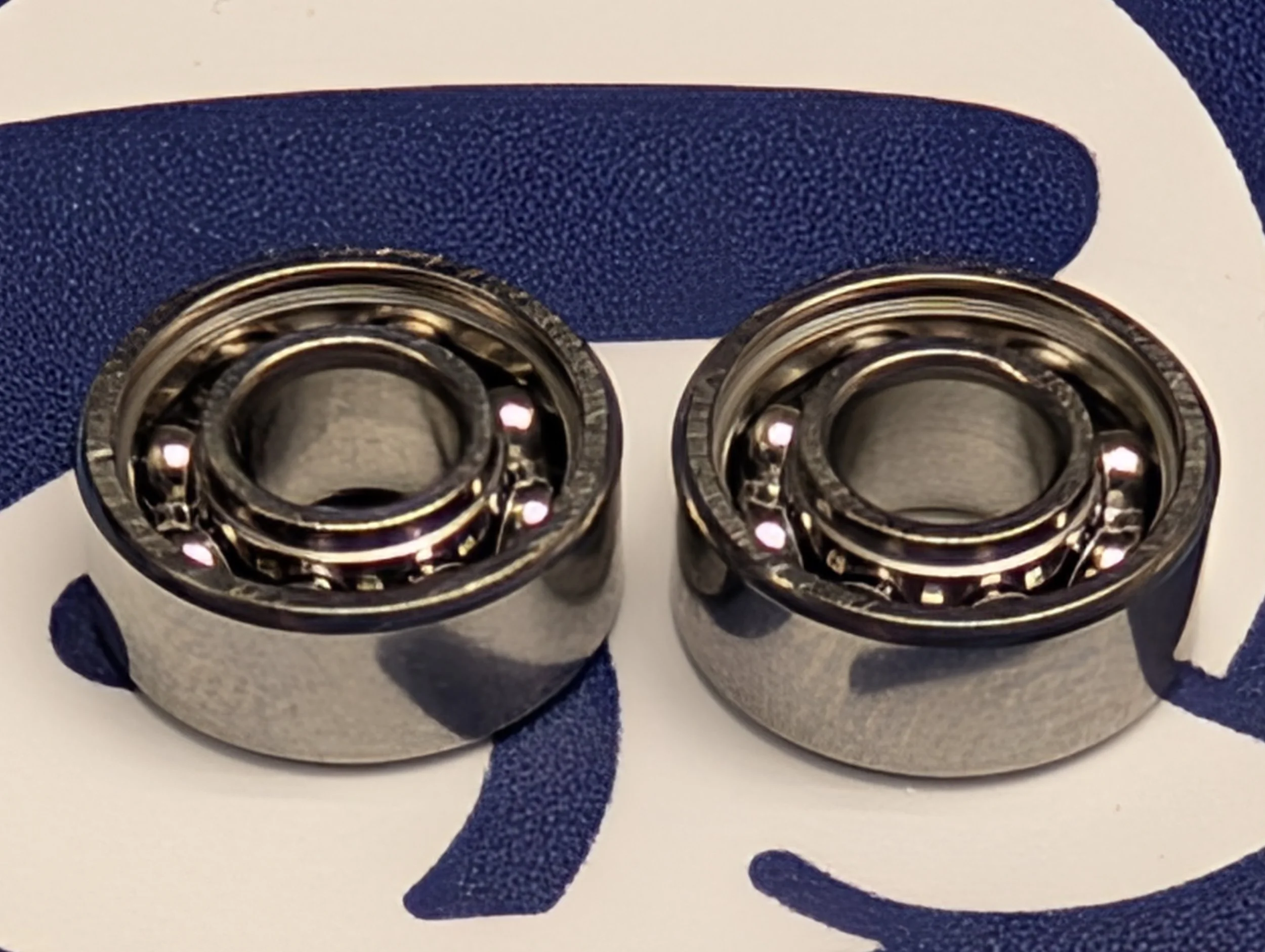
NMB DDL-1150ZZY04 stainless bearings as used in this build
Thank you for reading. Now you have a solid foundation to build from in your endeavors with the small Ambassadeur. These reels are a riot to fish and provide such a raw and connected feeling that you just can’t get with something newer production. They’re famous, well regarded, and highly sought after for a reason. It is up to people like me and you to keep the spirit alive and ensure the legend continues. No matter what the shiniest object being sold by reel manufacturers today might be, it doesn’t have the soul of the small Ambassadeur. Happy fishing!