
a different way to fish for trout
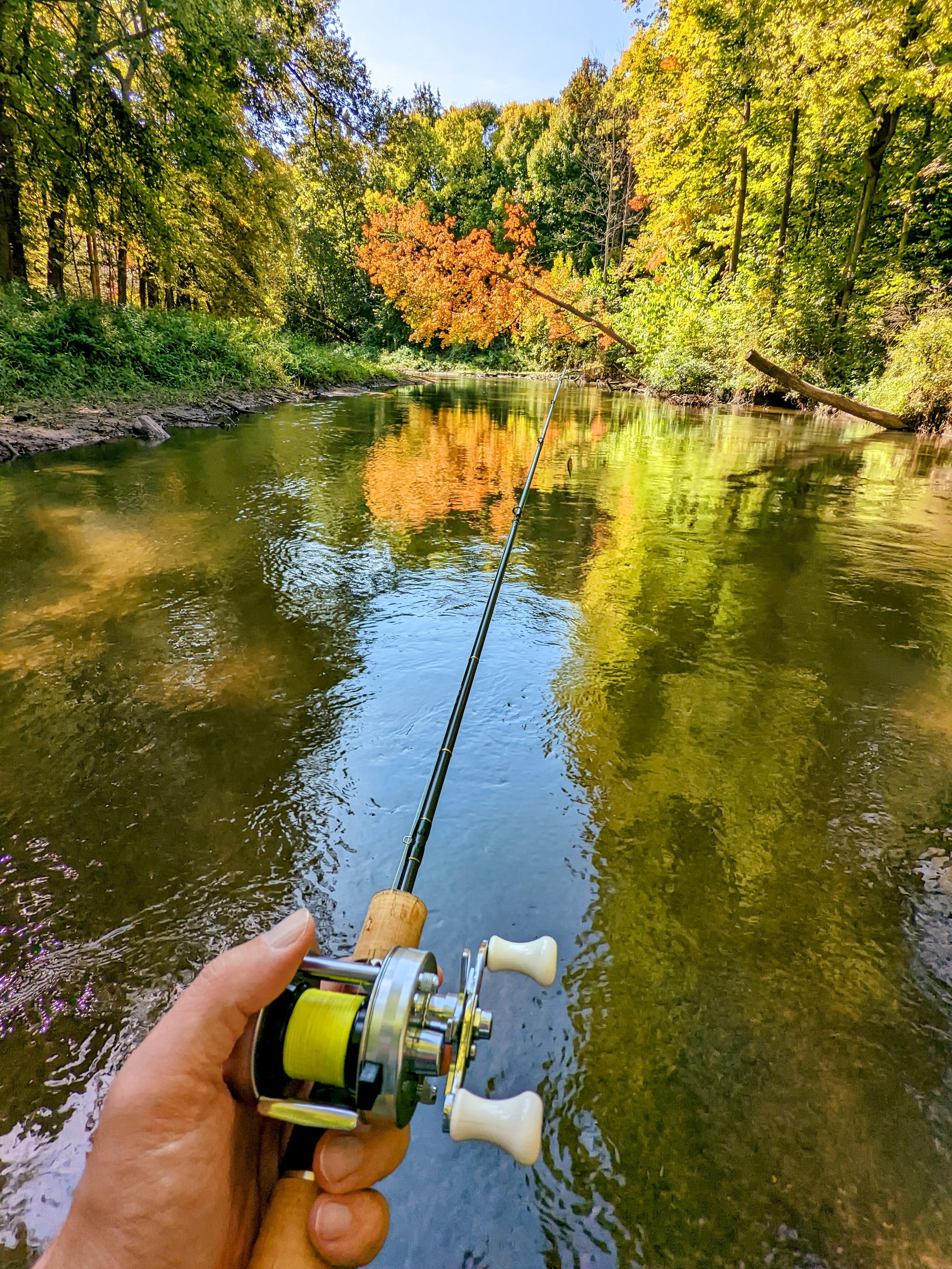
Out and about on a pleasant afternoon
Trout are some of our favorite species to pursue here at Ashlin Fishing. Walking the dense forest in search of a creek far off the beaten path is a moment of zen, especially on a crisp spring or fall morning. The dawn chorus of robins, blackbirds, chickadees, wrens, and cardinals is the most beautiful orchestra a person will hear. It brings feelings of peace, warmth, and belonging unlike anything else. Just before the sun breaks the horizon, the robins sing en concerto, hoping to attract a mate. Following them, the cardinals and Carolina wrens join in to complete the ensemble. Nearer to the wetlands, the red winged blackbird makes an appearance with his percussion-like falsetto, completing the line-up. It is during this moment in the morning at trout camp, that it is time to rise and take to the trails. This is what makes trout fishing special. Not just the fish, but the environment one encounters along their journey. After all, trout fishing is a 50/50 sport; half fishing, half adventure. It reminds one of their insignificance in the universe and that they are part of something much bigger than they can perceive. The awe inspiring surrealism of nature and its inhabitants is something lost on all but the bushwhacker.
In the USA, trout fishing is primarily conducted via fly tackle. This has been the main mode of trout fishing for the last 2200 years of humanity; hair and feathers tied to a hook and drifting in the current until a hungry trout surfaces thinking it has found a tasty meal. While fly fishing is itself an artform, there is a new method born on the mountain streams of Japan that involves just as much technique and artistry; mountain stream bait finesse. I shouldn’t say it’s a new method, but new to the USA. In Japan, mountain stream bait finesse has been part of the culture for over 50 years, using small baitcast reels with lighter spools in order to cast baits suitable for trout. Mostly minnow style baits are used, what we refer to as jerkbaits in the USA. They are meant to be fished fast, and fished near structures like logjams, root wads, and undercut banks. Mountain stream tackle differs greatly from more traditional spinning tackle in that the rods are markedly shorter and feature a trick from the fly fisherman’s playbook, the progressive taper that better keeps fish pinned. Early on in the mountain stream niche, most rods were homemade from cut down fly blanks, which differed from the more common parabolic ultralight spinning rod blanks of the day. As to the benefits of mountain stream tackle; first and foremost, it is meant for accuracy, and second, the ability to gently land a lure in a manner that doesn’t spook nearby fish. Trout are skittish after all, and most of the time they will be gone before you even knew they were there in the first place. If you can see the fish, it can see you.
How does mountain stream tackle fit the USA, you may ask? Having used the tackle and methodologies for some time now, it fits anywhere you find skinny water; creeks meandering through the Eastern Woodlands of Michigan, Minnesota, Wisconsin, New York, Pennsylvania, and Vermont as they’re all ideal spots. Out west, the mountain streams of Colorado, California, Washington, Oregon, Montana, Wyoming, Idaho, and Utah are also a natural fit. Mountain stream bait finesse as it is now crosses the wires in the brains of those used to more traditional methods in America. On occasion, I've had others tell me “you aren't going to find bass here”, and get a look of disbelief when I reply “I'm here for trout, brother, just like you”, as they glance over at the baitcast reel in my hand. It’s perfectly suited to American streams and creeks just as it is in Japan, and has been widely overlooked as baitcast gear in general is used for bigger lures and bigger fish in America. It can also be your ace in the hole for river smallmouth, as smallmouth bass occupy the same ecological niche in warm streams that trout do in cold streams. The same techniques and ability of reading the water apply. Even some of the lures used are the same.
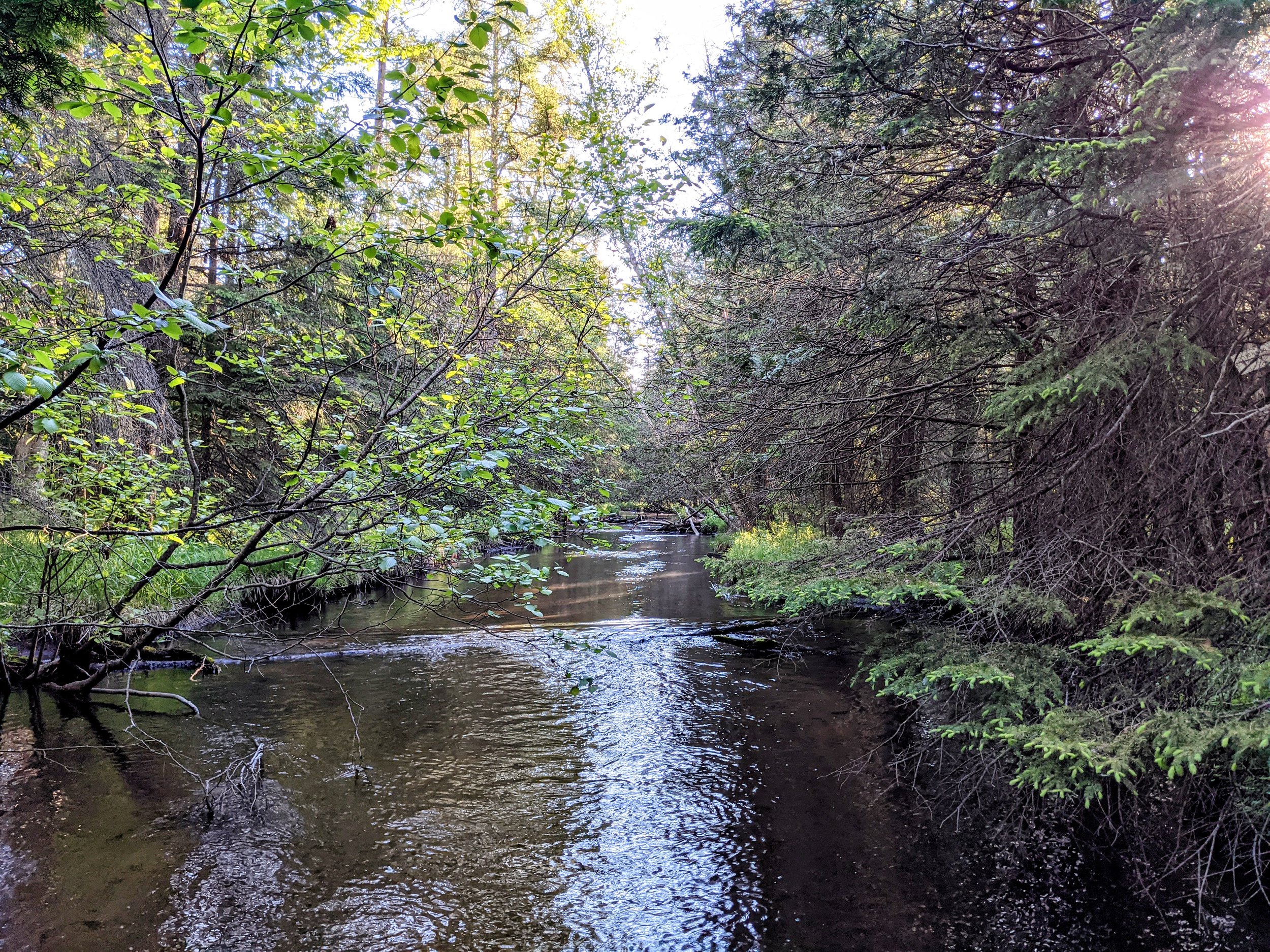
The natural environment of mountain stream bait finesse tackle
Mountain stream rods will often come in under 6 feet in length, with the majority falling into the 4’-5’6” range. While they may sound like a fairy wand of sorts, they are anything but. They come in a variety of powers, line ratings, and lure weight ratings; everything from ultralight to medium heavy power. A favorite of mine is a Daiwa Silver Creek Glass Progressive 5’1”, a light power rated for 1/16 to ⅜. It is also rated for 10-16lb polyethylene braided line, excellent backbone in a small package with enough finesse to give an articulate presentation, and plenty of oomph to land a 20”+ brown trout. Being short can seem like a shortcoming, but on the other side of the coin, you are rewarded with precision casting and less danger of whacking trees, branches, or other obstructions as you are up to your shoulders in the undergrowth. As it may be, very few in the USA offer rods like that simply because the mountain stream style fishing hasn’t caught on here, yet. I once showed some of my own rods to the lead blank designer of a famous rod company based out of the Pacific Northwest, just to give him ideas for future products, but he didn’t seem very receptive. Initially, he loved the quality and spent a long time checking their construction and action and even took some notes, but nothing more. My big takeaway was that he didn’t see a market for it which is fully understandable. I understand that point of view, but to me, he was skipping over a golden opportunity, while brands like Megabass, Daiwa, and Shimano will soon beat him to the market. There is even a boutique brand, Graywolf Rods here in Michigan, that offers homegrown rods and blanks for both the fly as well as the mountain stream crowd. Shane has quickly gained a following with his Michigan made rods and blanks, and offers a very competitive alternative to those that would otherwise need to import from Japan. His rods are so well renowned that they are purchased and shipped abroad to mountain stream fishermen, even to the country where it all started. That is a testament to the quality of Graywolf all on its own. If you can tap into the elusive Japan market, you have a legend on your hands. As the owner of a few Graywolf rods as well as Japanese market rods, Shane has his blanks down to a science, and they perform marvelously. Some guys take chances and reap big rewards while others stick to familiarity and whatever comes with it, good or bad.
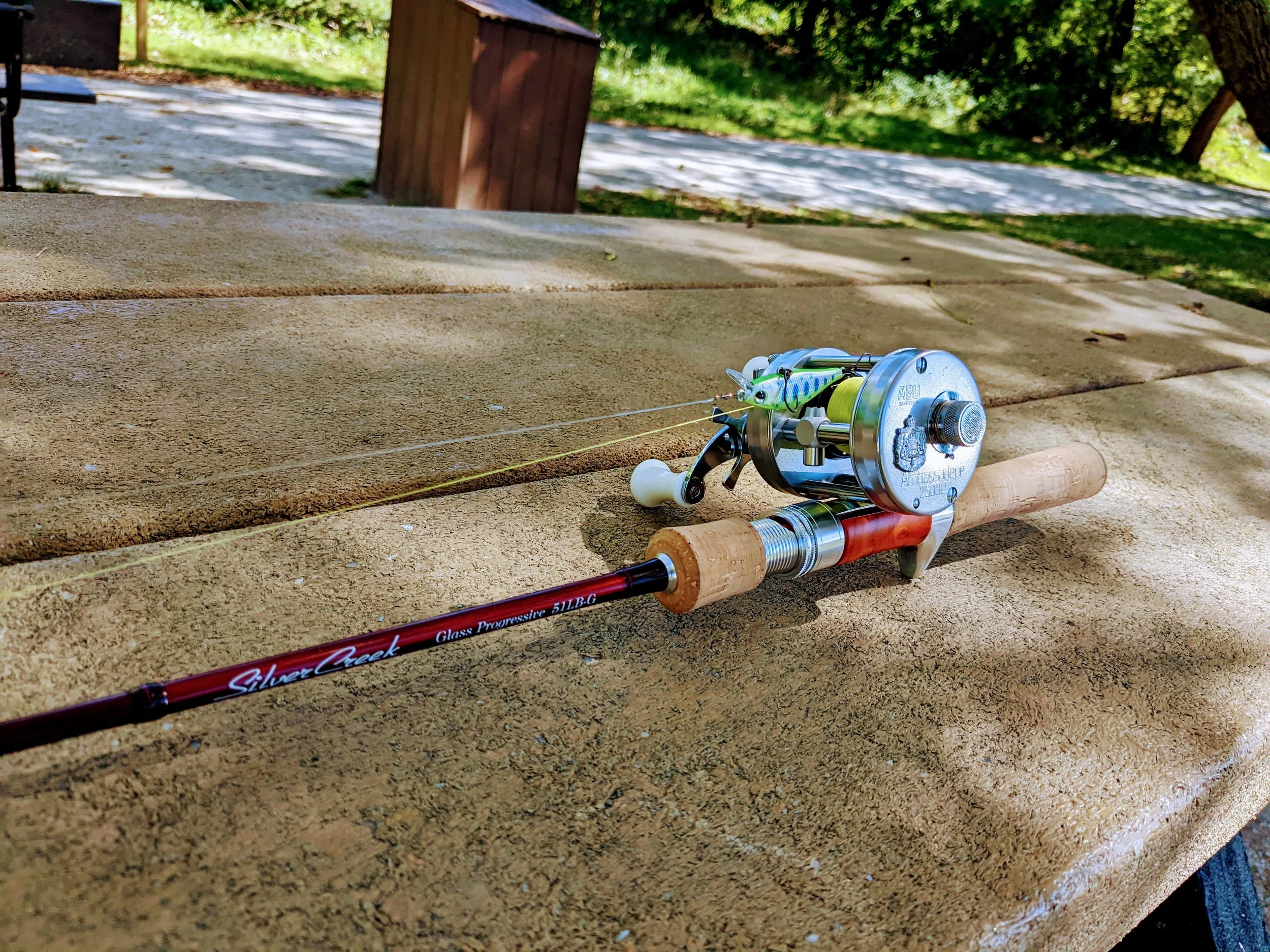
ABU 2500C on a Daiwa Silver Creek Glass Progressive 5’1” L
Which reels can somebody get here in the USA that will work for mountain stream style fishing? A few years ago, there were none. As the technique slowly gains popularity, we have reels like the Daiwa PX70 and Shimano Aldebaran BFS making a presence on the US market. In the past, those were Japan only models, but both Daiwa USA and Shimano USA saw the market budding and offered their wares accordingly. There are also Chinese models from KastKing like the Kestrel Elite and ARK with their Gravity BFS reel. Mountain stream bait finesse in Japan started off with the modified ABU Ambassadeur 2500C, which is still the choice of mountain stream fishermen even though it hasn’t been in regular production for nearly 20 years. There is a cottage industry of manufacturers and shops that produce every single part for the 2500C that it is entirely possible for one to build their own from the ground up. There is also Isuzu Industries (unrelated to the auto manufacturer) who has made their own line of mountain stream reels since ABU patents expired in the early 1970s. In the USA, the ABU 2500C was a hit in the middle 70s to early 80s, used for finesse bass fishing techniques early on. Guys like Don Iovino built their business by offering tuned reels in factory form that were casting lures as light as ⅛ of an ounce using 5lb Maxima Ultragreen monofilament. Even then, the focus wasn’t so much trout fishermen as it was bass fishermen who used the reel to fish small jigs, crankbaits, and weightless soft plastic. In Japan, all of the big reel manufacturers offer rods and reels suitable for mountain stream bait finesse. You will find them from Shimano, Daiwa, Abu Garcia and even lesser known brands like Tailwalk, Smith, Frog Products, Bright River, and Headhunters. There are many more, and some of the very best are only sold in Japan. In the USA, mountain stream bait finesse is catching on and soon enough we will see more brands bring their offerings to market.
Lures are a different story. Much of what is on the US market is already very suited to the technique. Rapala Original, Rapala Countdown, Yo Zuri Flat Heavy Minnow, and Owner Rip’n Minnow are great trout lures and ready to go. Personally, I like to remove the treble hooks and swap to single inline barbless hooks, both to be easier on the fish and make the lures less prone to snagging. That lets me fish right up against structures relatively worry free, and if I do get snagged, getting the lure free is much easier. Any jerkbait up to ⅜ oz or even more is suitable, whether you’re after smaller resident trout or larger migratory trout. There are also some Japanese lures well worth mentioning like the Tiemco Laks, Smith D-Contact, Major Craft Eden, and Daiwa Silver Creek Minnow. Each comes in a variety of sizes, colors, and rates at which they sink. Some have a slow and shimmering fall while others sink like a rock. Since I’m a run and gun kind of trout fisherman, I tend towards the faster sinking minnows since I fish them fast and keep moving if I’m not hooking up in short order. In the USA, lure fishermen tend to use spoons and spinners for trout, often overlooking jerkbaits. I will say with confidence that I do catch larger fish with jerkbaits than I do on spoons and spinners. Trout psychology says that a baitfish will provide more energy for less work than munching nymphs and insects. They are biologically programmed this way. The larger fish are more piscivores than they are insectivores. A lot of fly fishermen know this and catch their largest fish on streamers as they imitate baitfish instead of insects. Fishing jerkbaits works the same way.
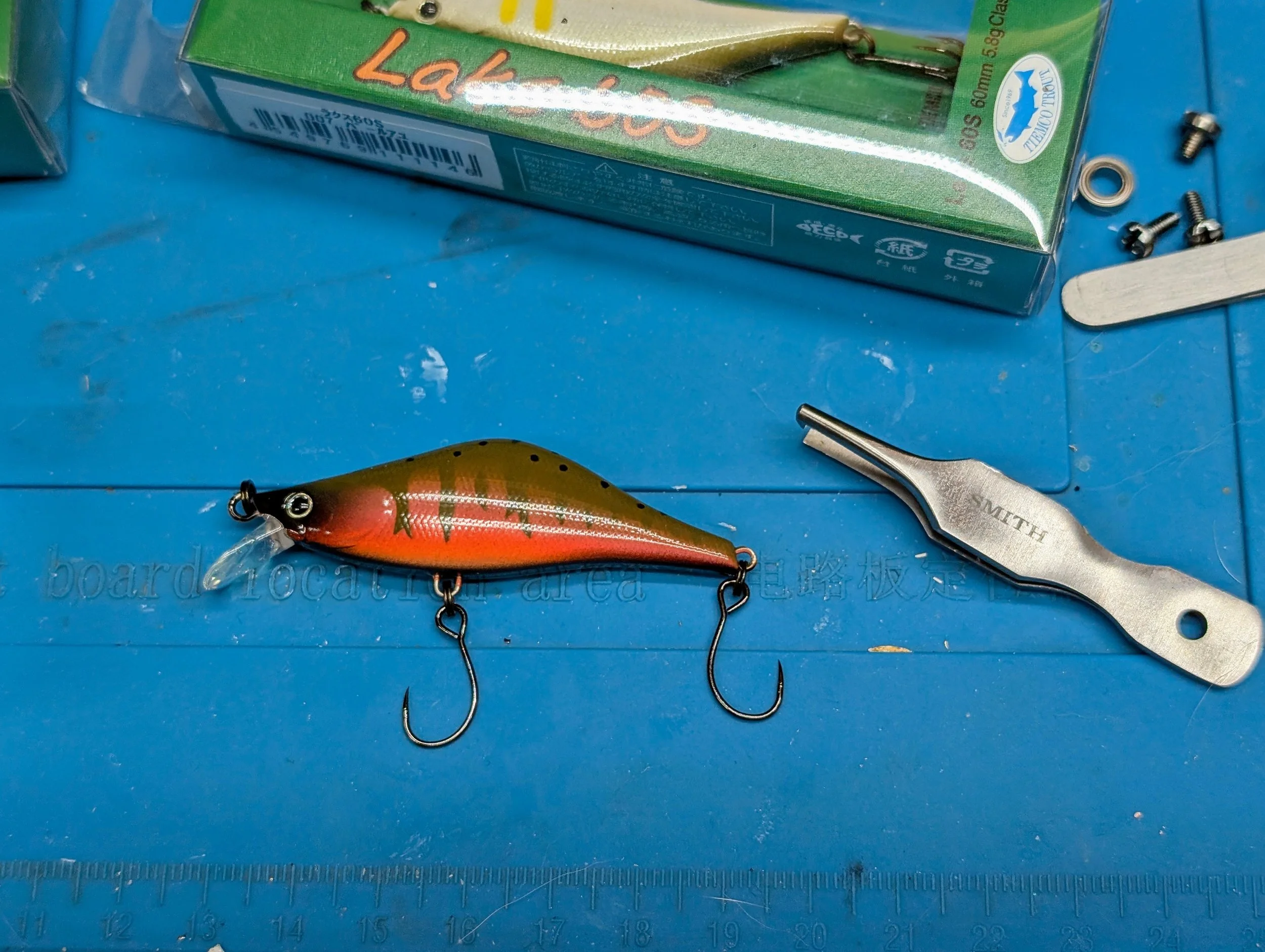
Tiemco Laks 60S after single hook conversion
In closing, we can see that there’s a huge and untapped market for mountain stream bait finesse in the USA. Naysayers will say “well I can do that all on spinning gear”. That’s good and if it suits you, you are doing the right thing. There is no incentive to change or try something different and that’s completely fine. Others may want to see what all of the fuss is about and that is why I wrote this article, to give a thorough understanding of the black hole you may find yourself travelling. It’s different and a lot of fun, but at the end of the day it’s what’s between your ears that counts. That’s what puts fish in the net. I’m not here to sell products, but to show a different path. Should you travel it is completely up to you. If you do, enjoy the ride. If not, keep on keeping on. Happy fishing!