
the legend of the miracle oil
Something often overlooked when it comes to a reel, the lubrication. There is a countless variety of greases and oils out there, some catered to the reel nerd, and some intended for other industries and professions. Lubricants, especially those made for reels specifically, can cost an eyewatering amount of money. Are they hype? Are they truly required for a reel? The answer to the first question is yes, and for the second question, no. We like to think of our reels as precision machines where the smallest change will affect end performance, but that is seldom the case. The fact of the matter is, reels are in fact simple machines and not very precise in the grand scheme. They are marketed as such, but these reel specific greases and oils are made very cheaply, elaborately marketed, and sold at a much higher price. Why are they sold at such high prices? First off, a small quantity of grease and oil will last the shadetree reel technician a good amount of time, especially if he or she is only doing their own. It’s a way to maximize profits from somebody that would be purchasing on an infrequent basis. Second, extraordinary claims, which is the realm of marketing. No matter what a lubricant reseller says, there is no magical grease or oil or when it comes to a reel. They are there to lubricate, prevent contamination, and repel water. That’s it.
What if I told you that you can completely change the feel of a reel based upon the lubricants chosen? If you’ve ever serviced a reel of your own, you’ve probably noticed that it doesn’t feel the same as it did when new. This isn’t a bad thing. A different feeling isn’t bad, it’s just different. Why is this? If you are using a basic lubrication kit, like for instance, the Penn grease and oil kit, you are probably using the same oil in all of the bearings, and the same grease everywhere else. Meanwhile, the manufacturer of your reel had a very light grease in the bearings, a thicker grease on the gears, a medium grease on the level wind, and a lighter grease on the clutch assembly. As we can see, the way both were lubricated is different, making the end result different. The thickness of grease is measured on the NGLI scale, going from 000 which is the softest, to 6 which is the hardest. When it comes to reels, you should choose towards the middle and pick neither the softest or hardest greases. Ideally, you should focus on NLGI ratings from 0 to 3. 0 or 1 for support bearings, level winds, drag washers, and clutch assemblies. 2 and 3 are best for gears since they will see the most stress and the higher shearing stability will play to your benefit. You can run a NLGI 1 on the gears, but there’s really no benefit unless the reel is destined for cold weather use. The lower shear stability means it will run out quicker. The reel may feel smoother, but the grease isn’t going to last as long and being thinner, will not mask mechanical noise as well. This is where you can experiment to find the qualities you desire. There is no perfect mix of greases to use, only those you prefer.
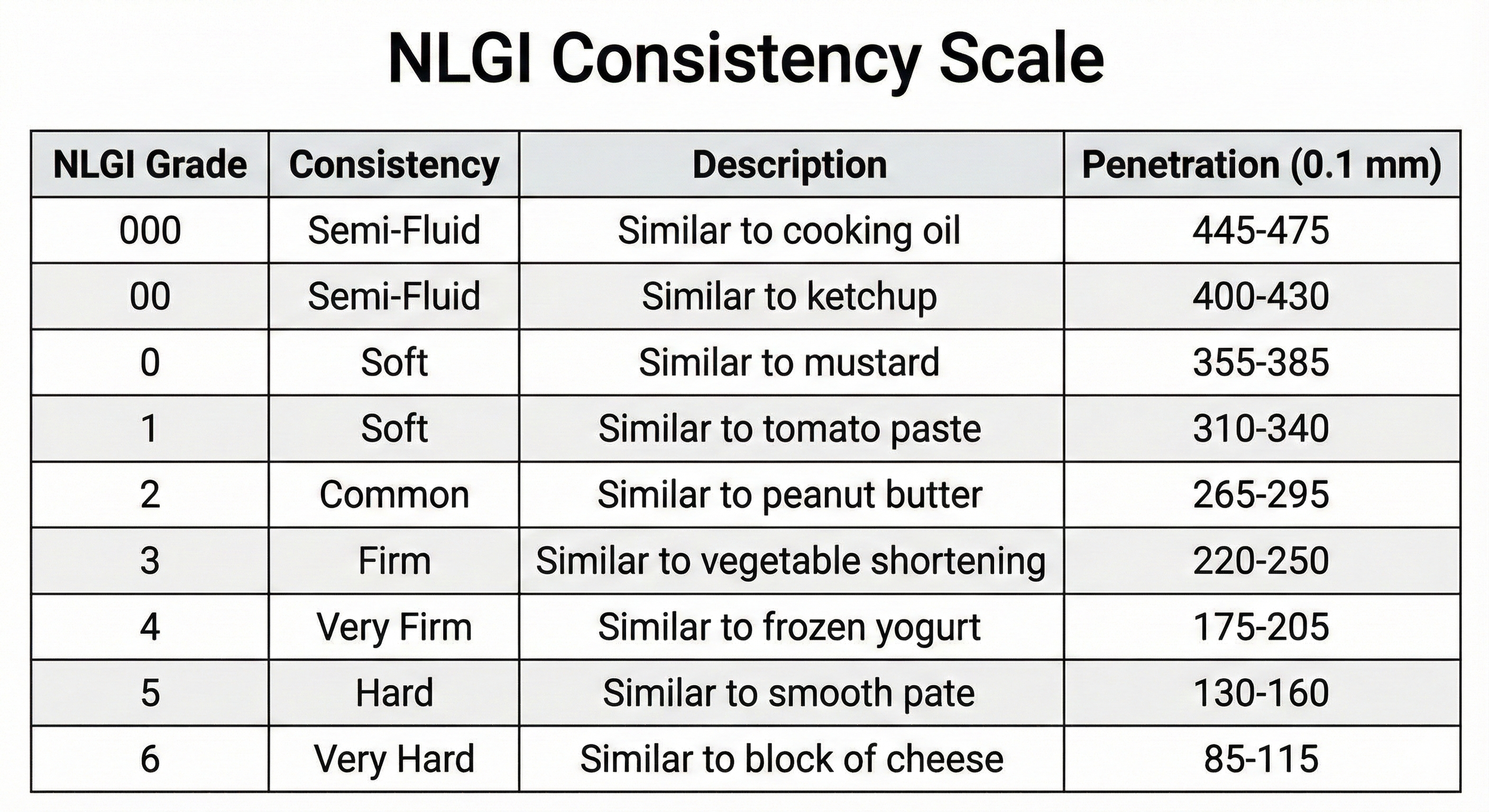
NLGI consistency scale, showing various grades of grease ratings
Oil can also be used to alter the feel of a reel. In baitcast reels, save for the spool bearings, the support bearings and level wind can be oiled. There is a gotcha with oil; the lower the viscosity, the more frequently it will need to be replenished. For reels with a synchronized level wind, like Abu Ambassadeurs and larger Shimano Calcutta models, low viscosity oil in all parts of the rotating assembly maximizes performance, a methodology different from disengaging level wind models where only the spool bearings may use said oil. Some people use very low viscosity oil all around on low profile models. It will give a low inertia feeling but at the same time, provide more noise and need to be periodically replenished. While it’s fun to smack the handle and watch it spin, that is not typical of fishing conditions, so it’s best to use higher viscosity in some spots in order to keep maintenance frequency to a minimum. Using something like a ISO VG 220, equivalent to 90W gear oil, will give a smooth and connected feel. The handle won’t be as free spinning, but the reel will quiet down some and the oil will stay put until your next full overhaul. With oil, it’s important to pay attention to the viscosity, measured in centistokes at 40°C. The lower the number, the lower the viscosity. For baitcast reel spool bearings and round baitcast reels with a synchronized level wind, ISO VG 10 to ISO VG 32 will give the best performance, and being that those bearings are easily accessible, you can re-oil them as needed. Another nice perk, if your Thumb Fu isn’t the greatest, higher viscosity oil can be run in the spool bearings to tame them, making the reel easier to manage for the end user. This will come at the expense of potential distance, but at the same time, bird nests won’t be as frequent of an occurrence. Choose what suits you best.
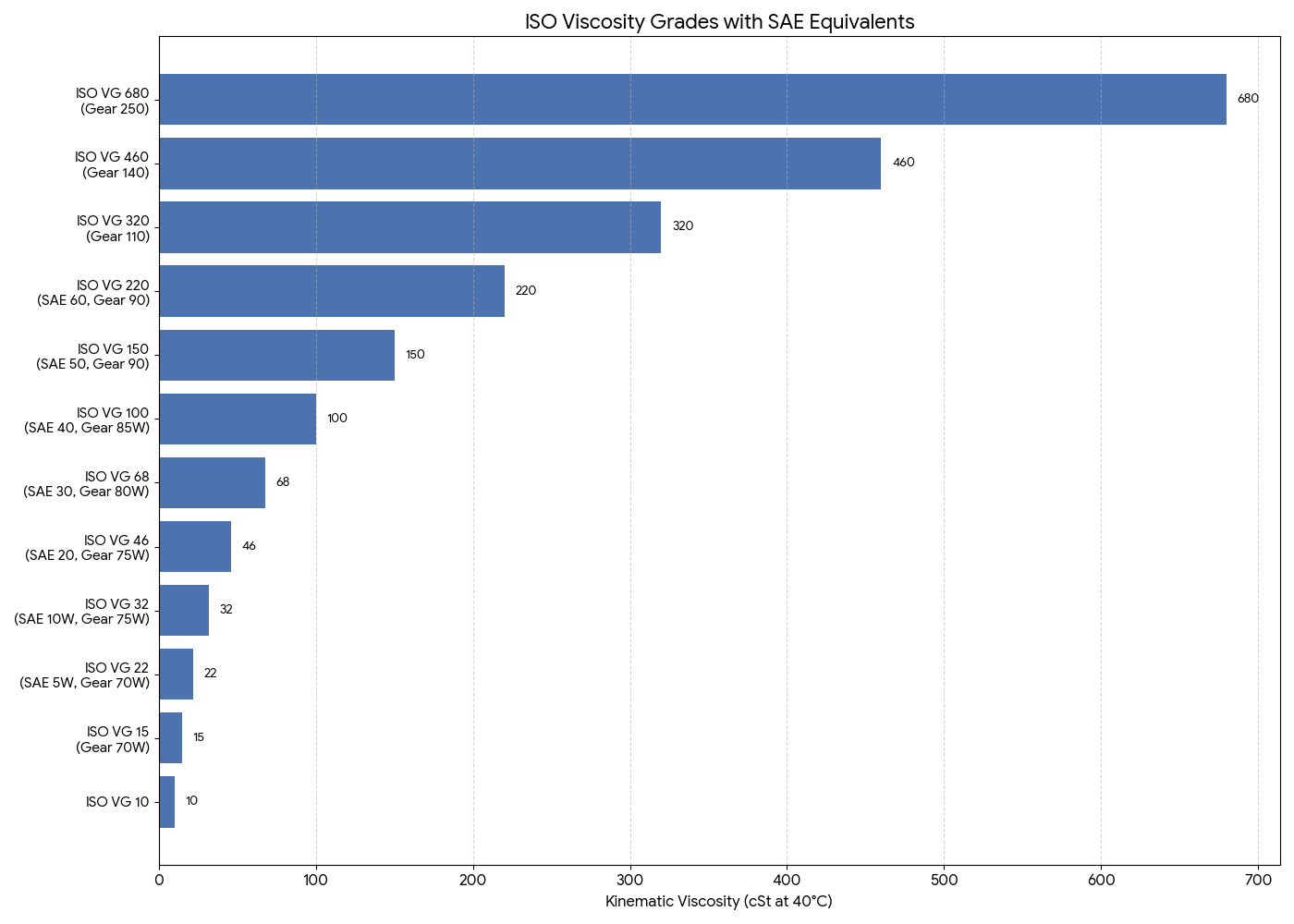
ISO VG scale for oil viscosity
Lastly, and this is important, please pay attention to MSDS (material safety data sheets) and technical data sheets. Any lubricant manufacturer worth considering will have this information available, regardless if their product is marketed to us reel nerds or some other industry. This data is important because you can use it to form an idea of how the end result will feel and behave. Unfortunately, many reel specific lubricants out there have none of this data publicly available. They depend on us to take their word for it. Taking that into account, these usually tend to be the lubricants that are very costly and hyped up. Marketing at work, making claims without demonstrating results or showing data to back it up. Some manufacturers will outright refuse to provide data, citing their lubricant as a secret formulation. Test results are not the recipe for a lubricant, but show how it behaves under the conditions it is intended for. Being kept secret is a poor excuse and does a disservice to those who value data to make smarter product decisions. There is nothing to hide, test results should be publicly available or available upon request. There are so many greases and oils out there that are ideal for reel use that you will only ever experiment with a small fraction. As long as they are designed for use in wet environments and provide protection, you can choose at your heart’s content. Experimentation is what makes this fun, so don’t be scared to try something new and stick up your middle finger at the snake oil peddlers and do your own thing. Happy fishing!