
cracking the cardinal code
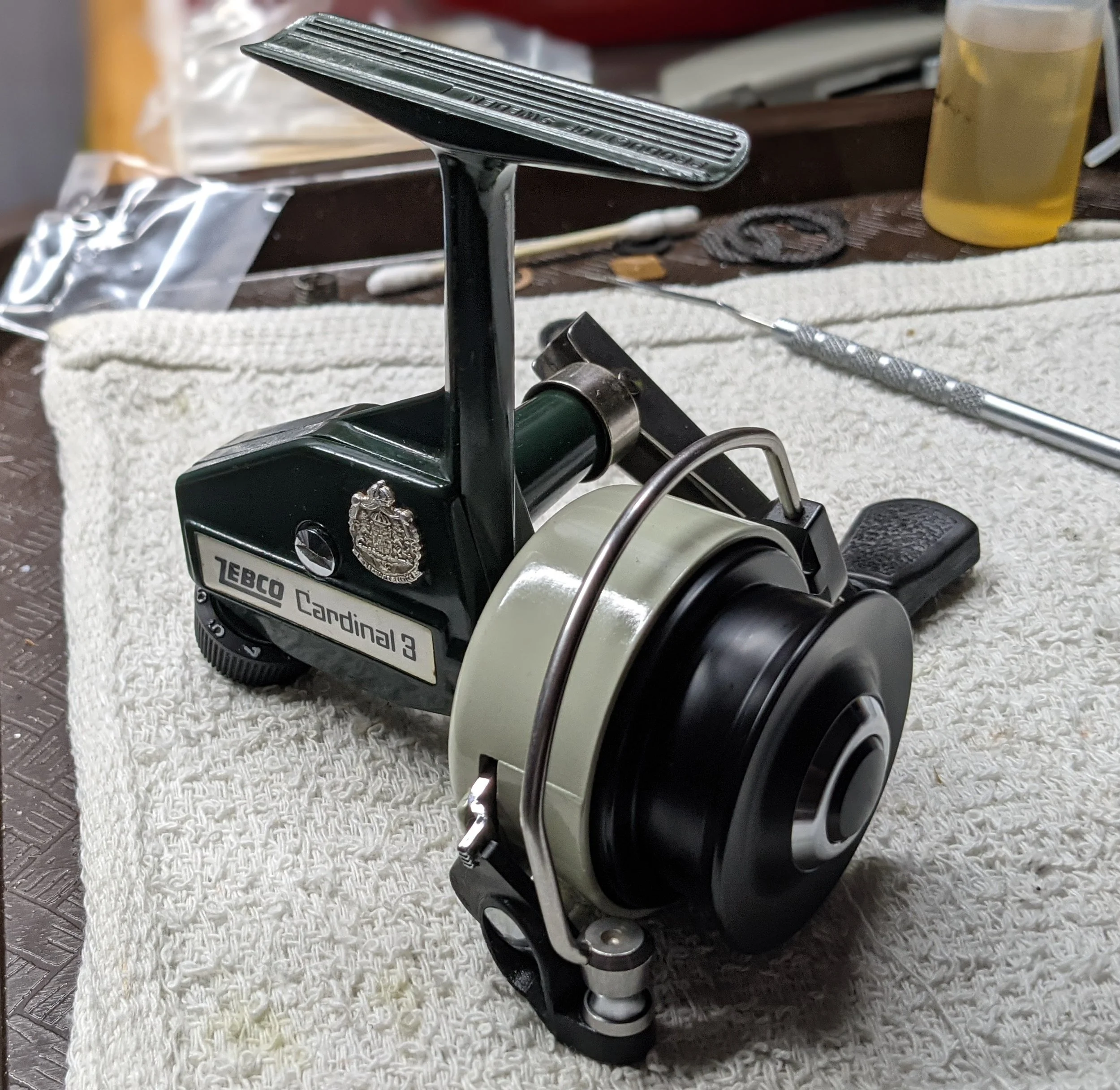
1981 Zebco Cardinal 3, the US market version of the ABU Cardinal 33
A Cardinal, a pause, and a breath; reach for the bail, pick your target, and you are greeted by the messenger from heaven. Quite possibly the most well-regarded spinning reel of all time, the Abu Cardinal—much like its sibling, the Ambassadeur—forges an emotional connection between the fisherman, his gear, and whatever quarry happens to be on the line. Built upon clever engineering and the principles of simplicity, it is little wonder this reel has withstood the test of time. Ask any old timer about the Cardinal and you are certain to hear countless stories born of an unending admiration for such a fine tool. As a matter of fact, that old fellow is likely still fishing with the very same Cardinal he bought with his paper route money as a lad; I know this for a fact, having serviced plenty of them for their original owners. Despite having exited the market some 35 years ago, plenty of these reels remain in the wild, and all they require is a little love. They may be missing a fair bit of paint, but I can assure you, they will clean up and fish wonderfully.
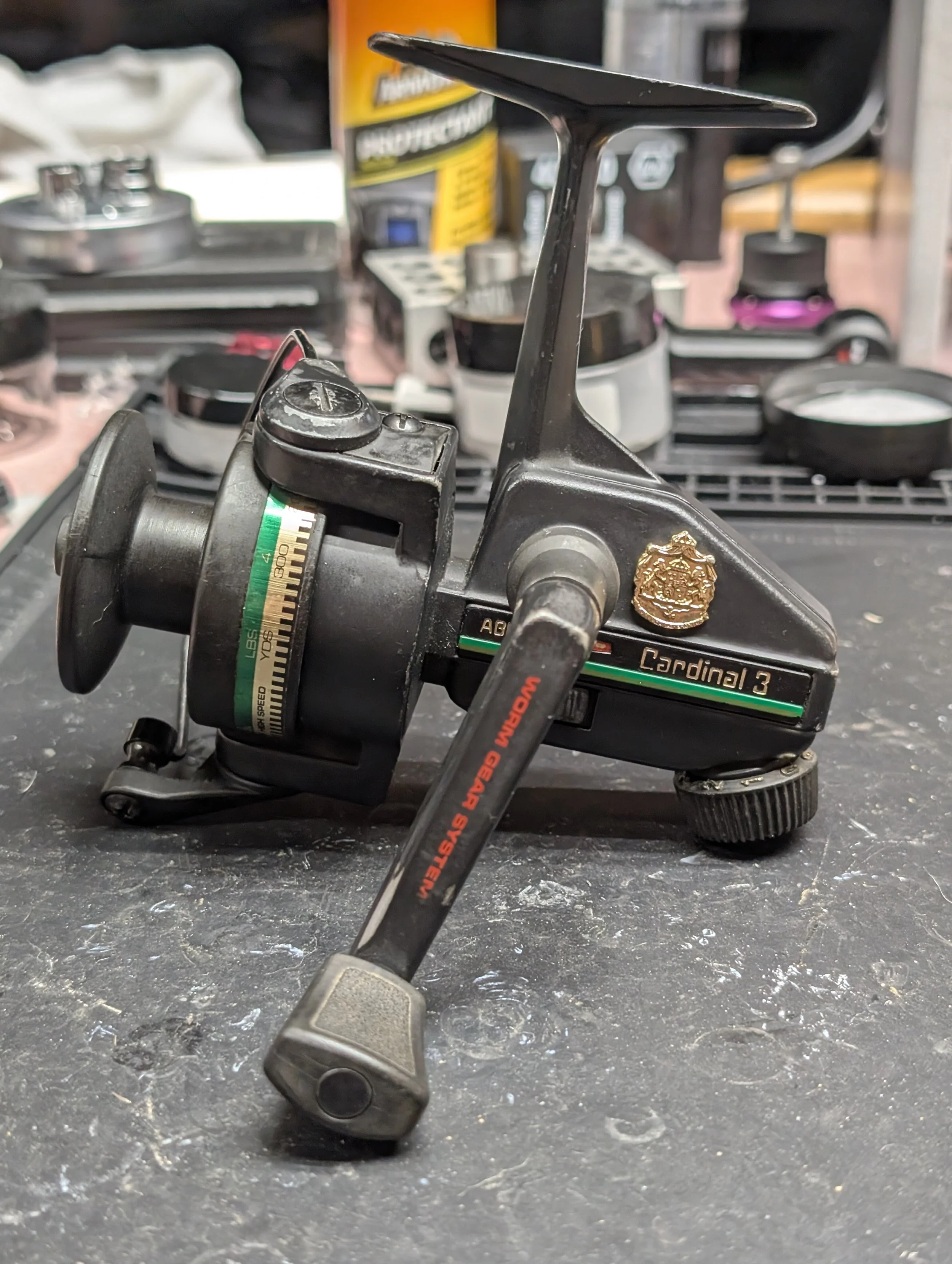
1984 Abu Garcia Cardinal 3, which would take on the C3 name in the future
Introduced in 1975, the Cardinal 3 came in many iterations until 1992 when production stopped. While thought to be long in the tooth by the end of production, demand dropped as it didn’t have the new features for the day, like instant anti-reverse and multiple bearings, nor was it capable of putting up impressive drag numbers. On paper, it was an inferior reel. It didn’t fit the fast-paced corporatized whiz bang culture of the time and thus, it was discontinued. The Cardinal comes from a time when durability was the key selling point. It’s a tool, and a highly effective one at that, yet it is not a statement piece, but it can be if you want it to. These reels have been catching fish for many decades now with only bail springs failing on occasion. When we pause to think how many hundreds or even thousands of fish one of these has had on the line, we know we are dealing with a marvel of craftsmanship, engineering, and high quality materials. For all intents and purposes, the Japanese made Cardinal C series is just as good as its green and cream predecessor, but with the added benefits of a skirted spool and reversible handle. Original Cardinals were left hand retrieve only, with just a couple of right hand prototypes in the wild. No matter the flavor of Cardinal 3 you decide, you will get a fine fishing instrument.
What is it that makes the Cardinal 3 so highly regarded? There are many features with these reels that we don’t see any longer. Are those features obsolete? Well, sort of, but not really. A little background; in short, AB Urfabriken (ABU) historically made reels for us reel nerds. Until they bought Garcia Tackle Company, their US distributor, they focused solely on the higher end of the market. Budget models weren’t even on their radar at the time. They used high quality materials in simple and clever designs that were fully serviceable by the owner and lasted seemingly indefinitely. Quite a few of their reels even came with a pack-in tool, oil, and spare parts. The reels could be near fully serviced with that pack-in tool. Now think about the latest crop of spinning reels from any given manufacturer. Overly complicated for the sake of smoothness while sacrificing reliability to some degree. Apocalypse reels they are not. They are planned obsolescence marketed on weight savings, drag capacity, bearing count, and retrieval speed. For as smooth and refined as modern spinning reels may feel, there are certainly corners cut to give that impression, regardless of what the spec sheet says. It’s what’s inside that counts.
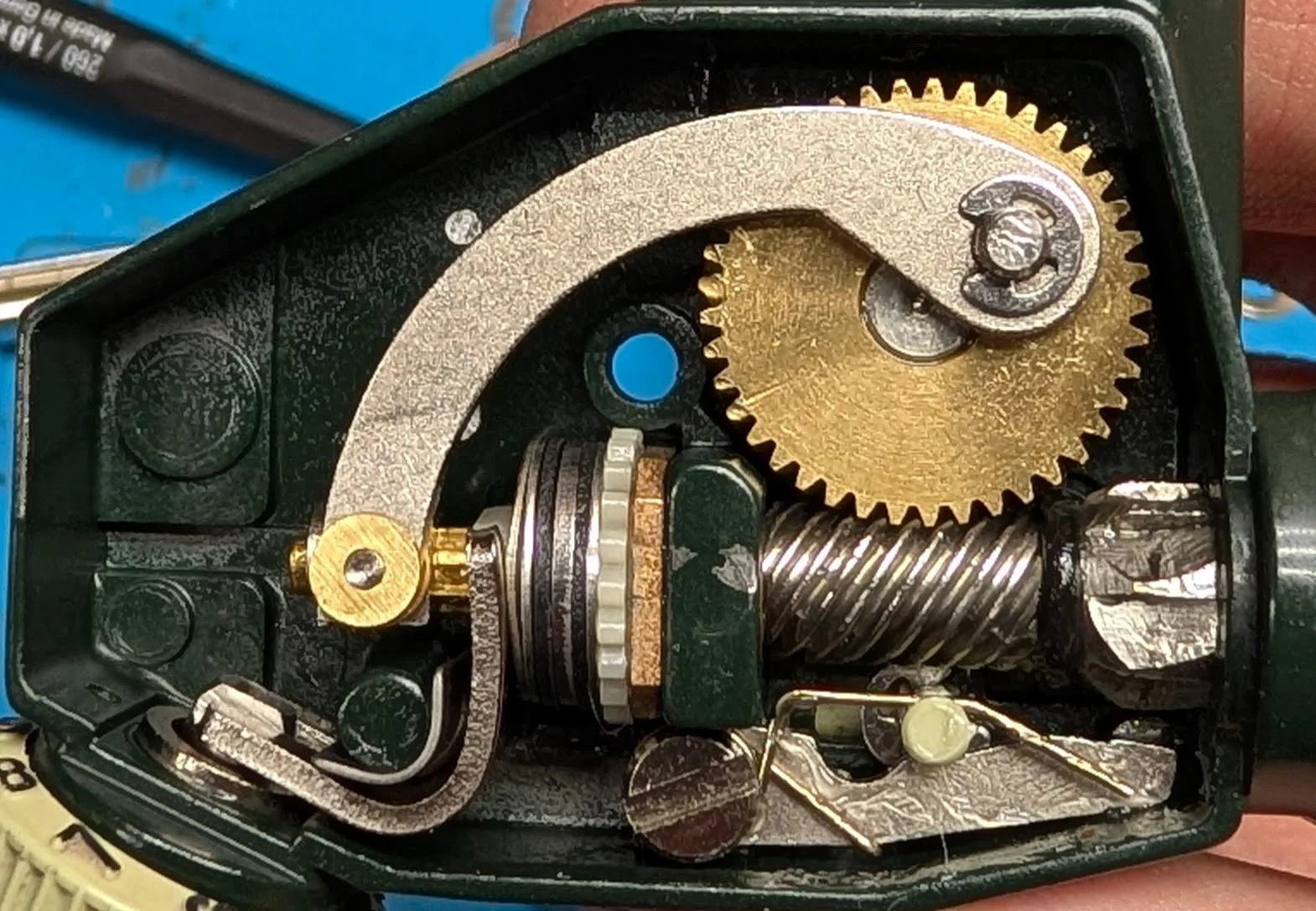
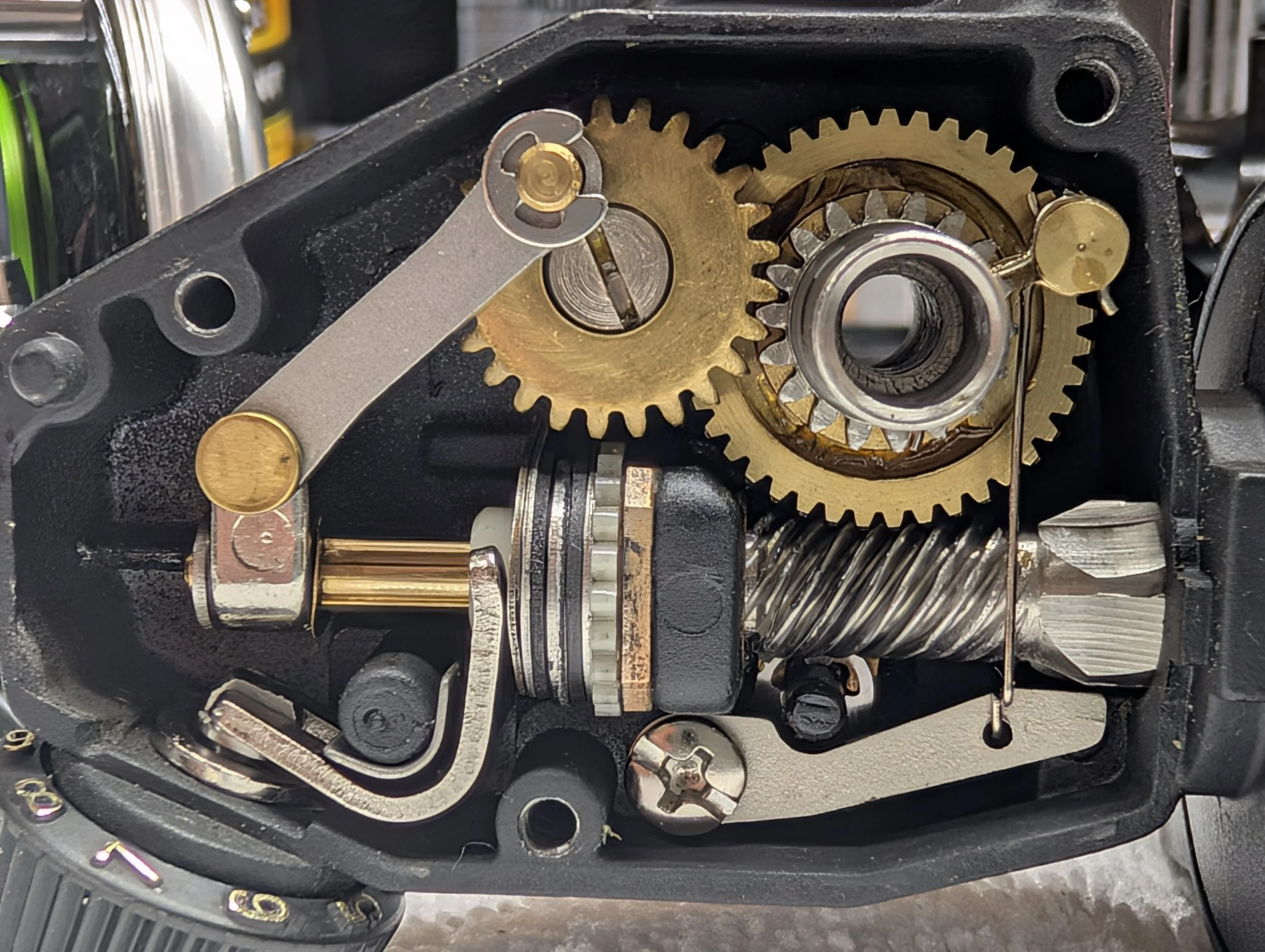
Looking inside of the Cardinal 3 and C3, we can see that these mean business. A brass drive gear, and in the C3, a brass oscillator gear with a linkage to the main shaft. What’s more, a massive stainless steel worm gear to turn the rotor. Looks beefy, right? That’s because it is. This was the fruit of ABU’s thoughtful engineering not long before the corporate gangsters started showing up with their charts in the boardroom. On top of that, we have but a single ball bearing for the worm gear. In the frame and side plate, we have precisely machined bronze bushings that support that brass drive gear and its massive stainless steel axle tube. In the Cardinal 3, there is a single large bronze bushing as they didn’t have reversible handles. Lastly, the fulcrum drag. While not capable of exceedingly high drag numbers, it’s exceptionally smooth and predictable, and dare I say smoother than even a modern spinning reel with a carbon drag. The hard Teflon washers don’t wear too much unless you really crank it down, which you shouldn’t be doing anyway regardless of reel type or architecture. The small knob at the rear makes fine adjustments much easier in the heat of battle, important for light line fishing. In their heyday, these and their bigger siblings were the most popular spinning reels for trout, salmon, and steelhead fishermen and continue to be in wide use to this day. They were once even well loved by the purveyors of bad fishing habits, bass fishermen. More on that in the future.
You may be wondering how the Cardinal feels at this point. It certainly isn’t as smooth as a modern spinning reel, but it has a charm you don’t get in something new either. The distinctive whirring sound of the brass on steel contact as the rotor is turning is something you aren’t going to find elsewhere. Whether that’s desirable or not is up to the fisherman, but I happen to enjoy it. Some people are in perpetual pursuit of a silent reel while others relish in their mechanical limitations and familiarize themselves with the music generated by the turning of components. The reel is very smooth either way, but you aren’t going to be able to watch the handle spin forever like with something modern. The anti-reverse on the pre-1984 green and cream models is also noticeably loud, but they weren’t designed to be fished with the anti-reverse always on in the first place. That switch was positioned to make it easy to engage during the fight. A lot of the old timers fish with the anti reverse off at all times, and seldom have issues bringing a fish to the net. In the ‘84 and up models, the anti-reverse was revised for quiet operation which means it can be run full time. Other than that, it functions the same. The pawl catches on the grooves machined into the stainless worm gear, about as tough as can be. Yes, there is handle back play, but you are rewarded with a system far more reliable than a one-way bearing which can be prone to failure. Ask me how I know; I’ve replaced many of those in modern Daiwa models from the budget to the higher end. The bearing sleeve and rollers in the clutch are prone to wear, and there is no fix other than replacement.
On the servicing end, the Cardinals are simple compared to the latest and greatest, by a long shot. A few words of note, these reels are somewhat sensitive to lubrication. Not in the sense that damage can result, but less than smooth operation. A light glazing of grease is all that is needed on the gears, and the drag gets even better when lubed with a high viscosity oil like the Goopy Stuff we sell in our shop. Grease the gears and drive bushings very sparingly. On the drive bushings, you can even opt to use a little of the Goopy Stuff in lieu of grease to make it even smoother. That oil is also good for the rotor bearing, giving a smooth and connected feel with a subtle hint of inertia. Just a single drop is all that is required. At the end of the day, we are dealing with a 50 year old design here, so there is much room for refinement with the lubricants being chosen. Modern synthetic lubrication really makes them feel a lot better compared to the dinosaur stuff from decades back, and it lasts a lot longer as well. This is where you get to truly create an experience, so grab your favorite grease and oil and see how it turns out.
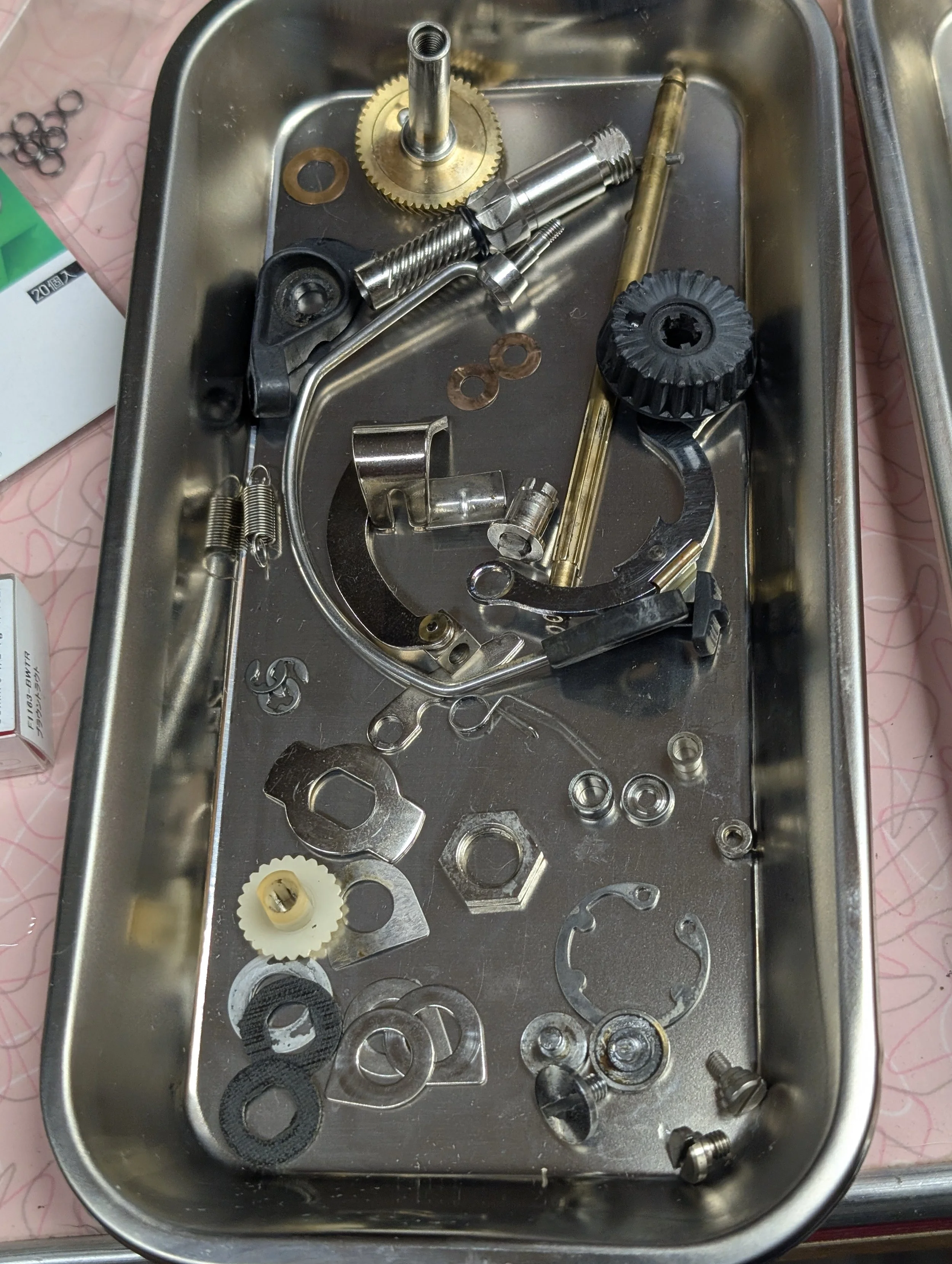
ABU/Zebco Cardinal 3 guts
While the Cardinal is great in stock form, a cottage industry has developed in Japan over the decades to improve these reels. The most glaring issue is the spool, to a point. While the 3/33/C3 are in fact classified as ultralight reels, their line capacity is anything but. The C3 is rated to hold 300 yards of 4lb mono, which is far more than necessary for ultralight to light fishing conditions. If thin line is your thing, you will want to back fill, preferably with 10-20lb braided nylon just to take up the space, then top it off with your working line, whether it’s braided polyethylene or monofilament. There are also aftermarket spools available from companies like Avail and small shops in Japan that can be found on Instagram. Shallow spools, handles, better line rollers, and drag washers are all at your disposal. Dress it up how you like or keep it as it was from the factory. You can have it any way you like. The Cardinal has attained its status for very good reason. While the newest stuff is sure to lure those who are addicted to specification sheets, the true crown jewels of freshwater spinning reels are found at thrifts, junk sales, and flea markets. Get them from where the eBay hawkers get them and keep the rest of your money for upgrades. When Abu Garcia coined the term “for life”, Cardinals and Ambassadeurs were specifically what they were referring to. Happy fishing!
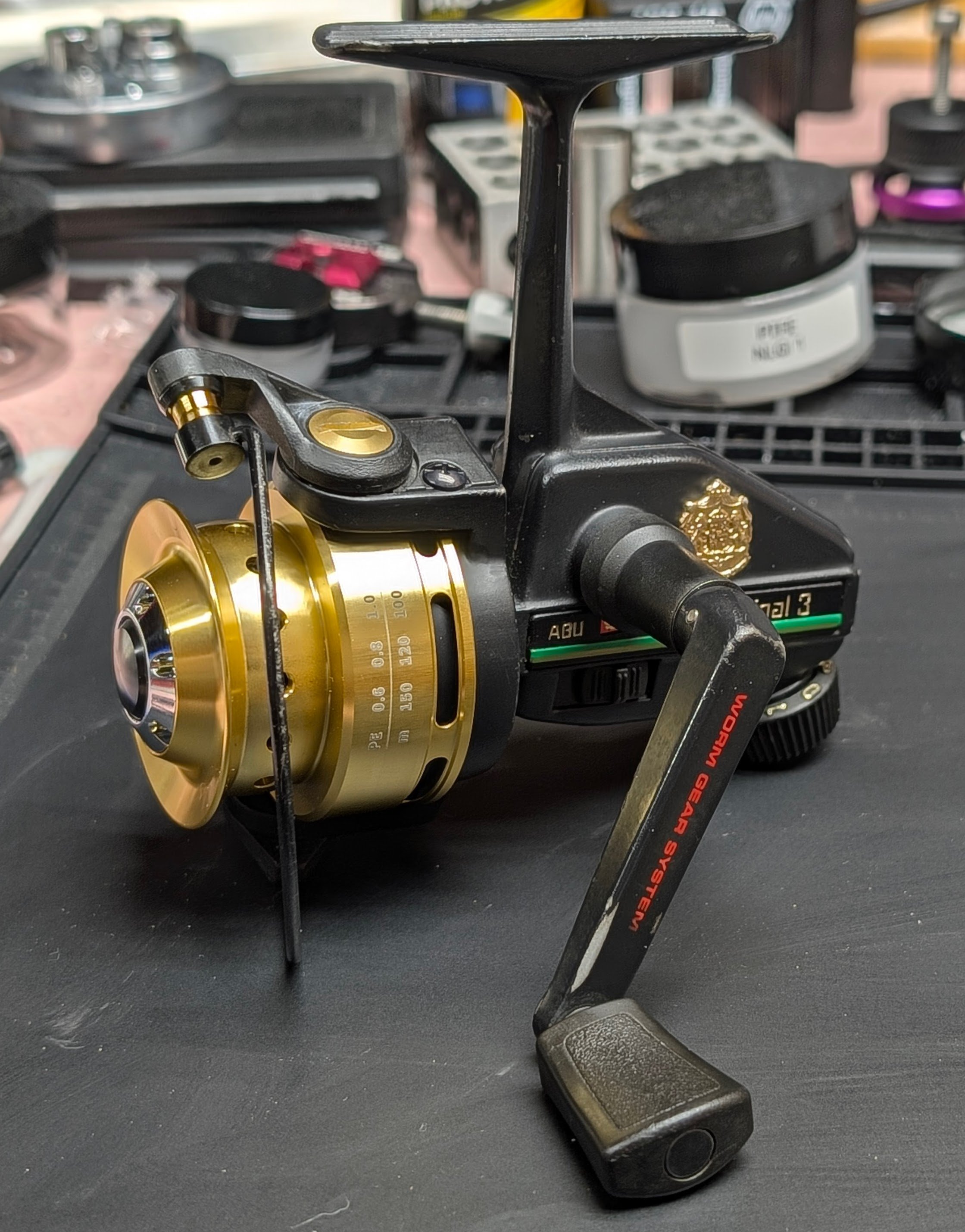
1984 Abu Garcia Cardinal 3 with some upgrades