
an ode to the daiwa ss tournament
One of the best kept secrets in fishing has got to be the infamous Daiwa SS Tournament line of reels. These were extremely popular from the late 80s well into the 2000s for a variety of species, and even have a number of tournament wins under their collective belts. They were so well reputed that when production ended the first time, guide services were up in arms and forced Daiwa’s hand to keep them around. Thus, production moved from Japan to Thailand, but the quality actually improved as the Japan made reels had drive bearings with plastic cages. In the Thailand made models, full stainless was on the menu, otherwise the reel remained unchanged for the entirety of its production from 1987 until 2022. What an impressive feat for any manufacturer whose business model relies on planned obsolescence. All this tells us is that if you do it right the first time, keep on keeping on.
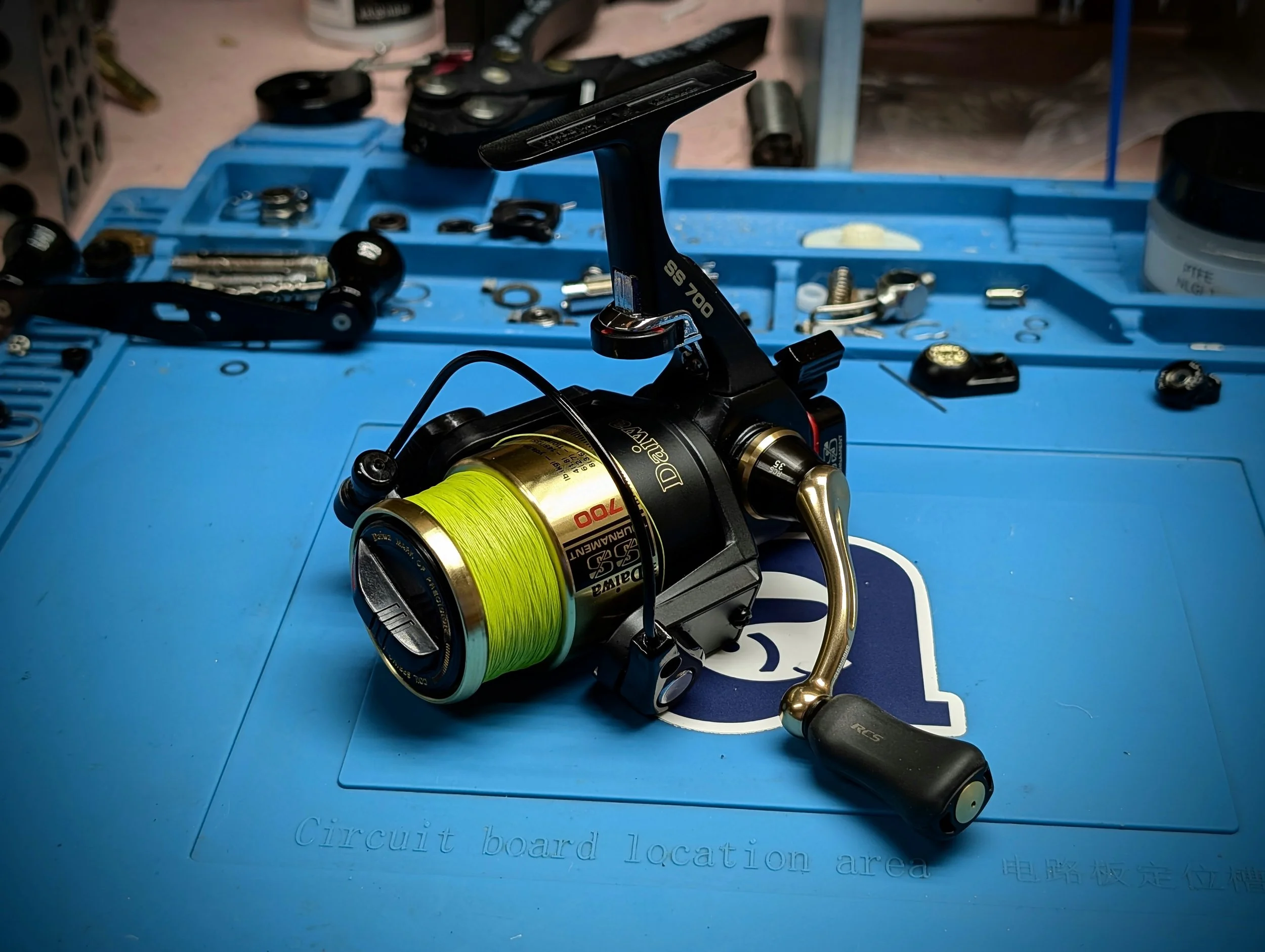
Daiwa SS Tournament 700 with a RCS 35mm handle.
If you’re still following along, I am going to delve deeper into what makes these SS Tournaments so great and how some competing models today are rooted in its design. On the surface, we have a reel that screams 1980s; it comes from the era of Trans Ams, cocaine, and Motley Crue, and it looks it, too. Aesthetics aside, it’s what’s inside that counts. The heart and soul is what makes it special as this was one of the first spinning reels to use a level wind to my knowledge. “A level wind, on a spinning reel?” you may ask, yes and it’s for oscillation. Much like a baitcast reel uses a level wind to guide line to the spool, it functions in a similar fashion on the SS Tournament. The main shaft has a carriage for a pawl just like a baitcaster, and the level wind drives the spool back and forth. This gives the reel excellent line lay, both in 1987 and right now. Line is laid in a crisscross pattern to prevent it from digging into itself, very necessary when running thin braided line. Not only that, but in the photo below we can see the level wind is driven by a beefy brass gear. Competing models used plastic, both then and now. The spur gear used in other models can make the spool oscillate slower, which may cause braid to stack up facilitating dig-in. As we can see, the SS Tournament was very ahead of its time, and was only dethroned because a competitor “borrowed” that design and took it to the bank, literally.
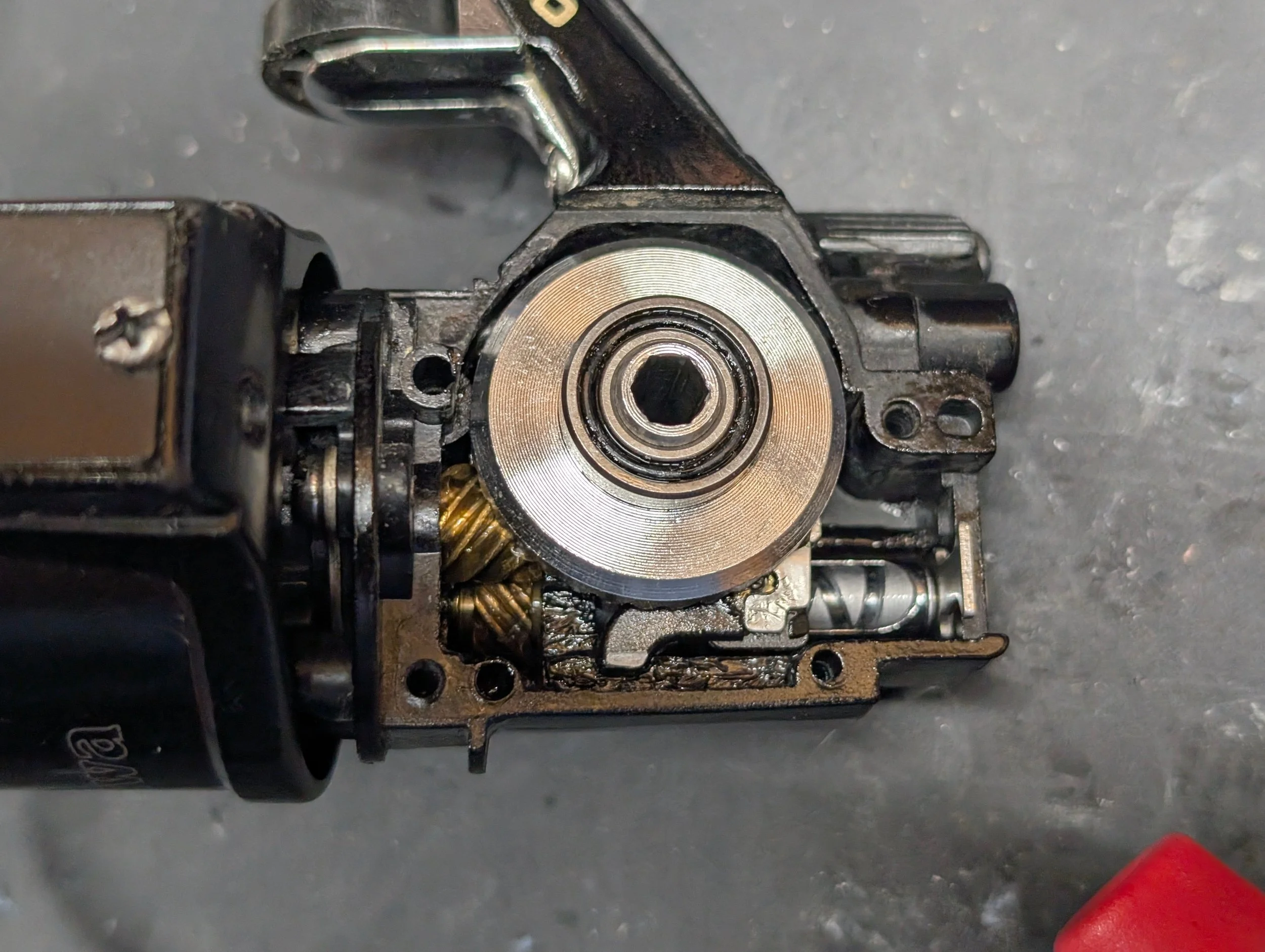
Enter the level wind oscillator.
Let’s fast forward to 1991. The SS Tournament has been on the market for 4 years, notching tournament wins in its belt and setting casting distance records. Seeing the success of the SS Tournament, along came Shimano with the Stradic. The Stradic is a fine reel, and the original is known for its smoothness, toughness, and longevity. So what made it so good? Daiwa, as a matter of fact, because the Stradic was a near copy of the SS Tournament and the only true differences outside of aesthetics, were how the anti-reverse was implemented and that it had an internal bail trip. That’s it. They took the rest to the bank, and still continue to do so. Every Shimano spinning reel from the Ultegra to the Stella can trace its roots to the Daiwa SS Tournament. It’s a real shame Daiwa has abandoned that design in all but their Japanese surf spinning reels, because the nylon spur gears they use now are prone to breakage. I’ve never seen a level wind in a spinner fail that wasn’t user error, but Daiwa dropped the ball. Why? We will never know. Most likely because a level wind assembly is more expensive than a cheap nylon gear, but what do I know?
Continuing with the SS Tournament, they are about the perfect bushwhacking reel. Tough as nails, reasonable weight, and an impeccable drag. What more do you need? I personally own a couple of the SS 700s, my most favorite ultralight reel of all time. I rank it right up there with the infamous ABU/Zebco Cardinal 3 and Cardinal C3. Yes, I said it. This thing is as good as it gets. Sure, new stuff is markedly smoother, but will it last? I’ve had many SS Tournaments on my workbench that had 30+ years of service and Cardinals even more than that. They last, and were designed and built to do so. These relics come from a bygone era where reliability was the focus. Reliability has taken a backseat to lightness, bearing count, retrieval speed, and maximum drag capacity. After all, those are what sell reels and as humans we have an innate eye for abundance; more this, more that, so it must be better. Next time you’re at a flea market, garage sale, or estate sale, take a good look around you. You might be finding gold.
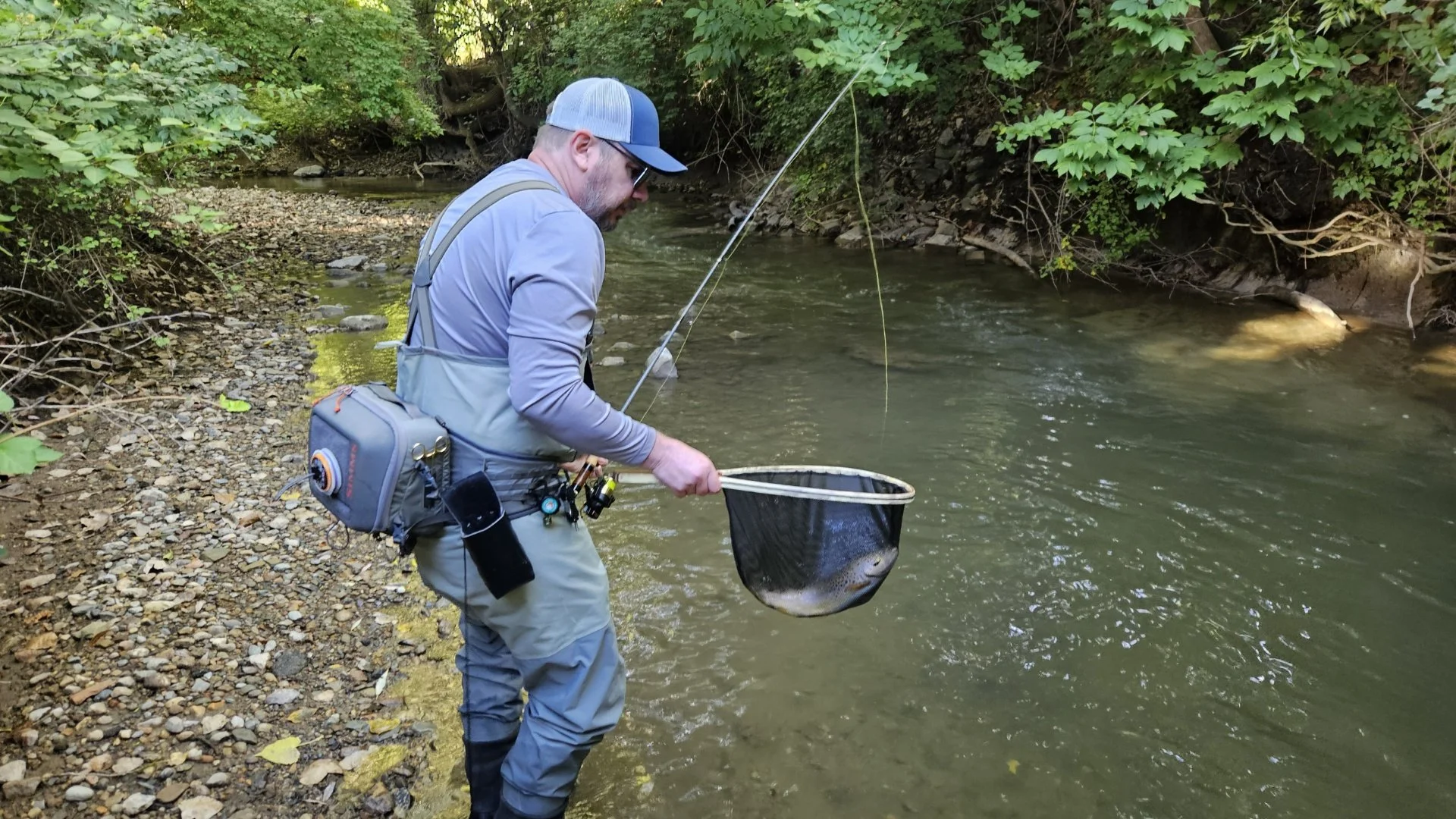
Perfect trout weapon