
apocalypse reel: the daiwa mini mite
Welcome to the first installment of the Apocalypse Reel series. While I personally focus on ultralight and light tackle, any of the larger models of the reels I write about in this series are just as formidable as their baby siblings. These are mostly spinning reels from the golden age of spinning reels, those made from the 1960s until the later 1980s. Some baitcast reels will be included in the future, but right now the focus is on spinning. First and foremost, I will explain what an Apocalypse Reel is; durable, simple in construction, and high performing. This is the kind of reel you want for back country camping or your bug-out bag. The models in reference are old, but still work well and are very easy to service, even for the novice with a minimum of tools.
To kick it off, we have the Daiwa Mini Mite. Released in 1978, the Mini Mite and its cousins, the 500C and 700C have attained cult status for those in the know, particularly trout and ice fishermen. A very well loved and reputed ultralight reel that could be bought as a combo with a 5-piece rod and carrying case, or as a standalone reel. As part of the Gold Series, the standalone unit had a box that designated it as model GS-0, while the Mini Mite combo had the MM-1 designation. Larger models only go up from there such as GS-1, GS-10, and so on. As far as modern reels go, this is about the equivalent of a 500 size. Small footprint, light in weight, and big on power. Tipping the scale at 6.3 ounces, it was light then and now.
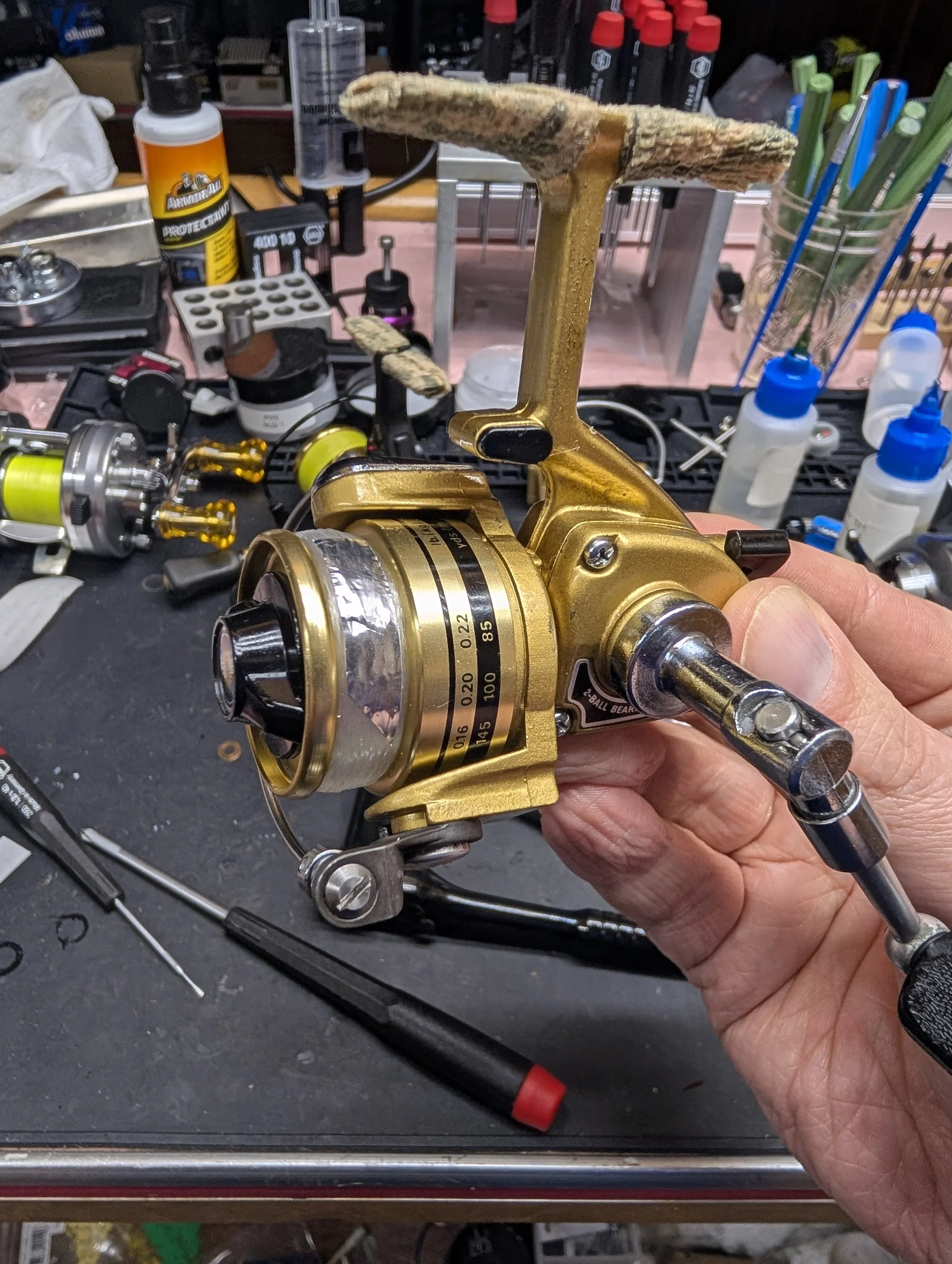
Tiny and mighty, the Daiwa Mini Mite
While not as refined as say a Shimano Soare XR or Nasci 500, it packs a serious punch. Just look at the anti-reverse assembly below. A steel ratchet gear and pawl keep that handle from turning backwards on you no matter what. Fishing with the anti-reverse engaged may shy away newcomers to the Mini Mite, because it is unapologetically loud. For a reel nerd such as myself, that’s just part of the music it plays during use. The overall design of the anti-reverse mechanism ensures there is very little back play in the handle. This little guy was built to last.
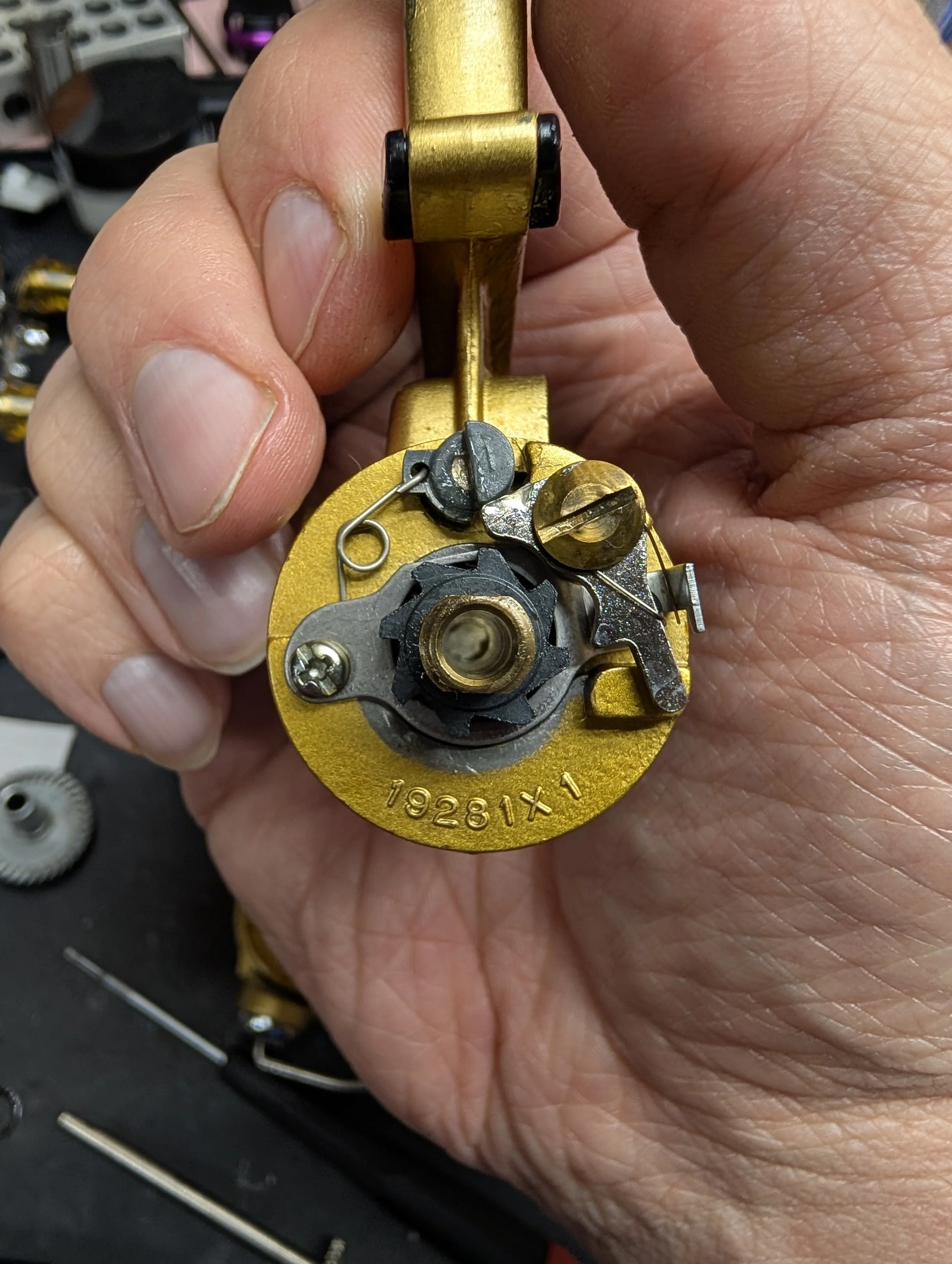
The anti-reverse, a big ol’ honkin’ ratchet gear and pawl setup
Going further, let’s take a peek inside. Pull off the side cover and you are greeted to 5 components; a ball bearing, an oscillating slider, pin, main shaft block, and the drive gear. The drive gear is an aluminum alloy while the pinion is brass. With a bearing supported pinion, and single bearing with a bronze bushing supporting the drive gear, this thing is smooth. As I mentioned above, it doesn’t feel as refined as something new, even a budget model, but if you plug your ears and turn the handle, you’d be none the wiser. This was a smart decision by Daiwa to put bearings where it counts instead of every conceivable place as they do now. That makes it much more reliable. No line roller bearing to seize, no handle bearings to succumb to the elements; just what is needed. With Apocalypse Reels, less is more. This reel is 48 years old and still fishing. Can you think of anything new that will hold the same bragging rights in the future?
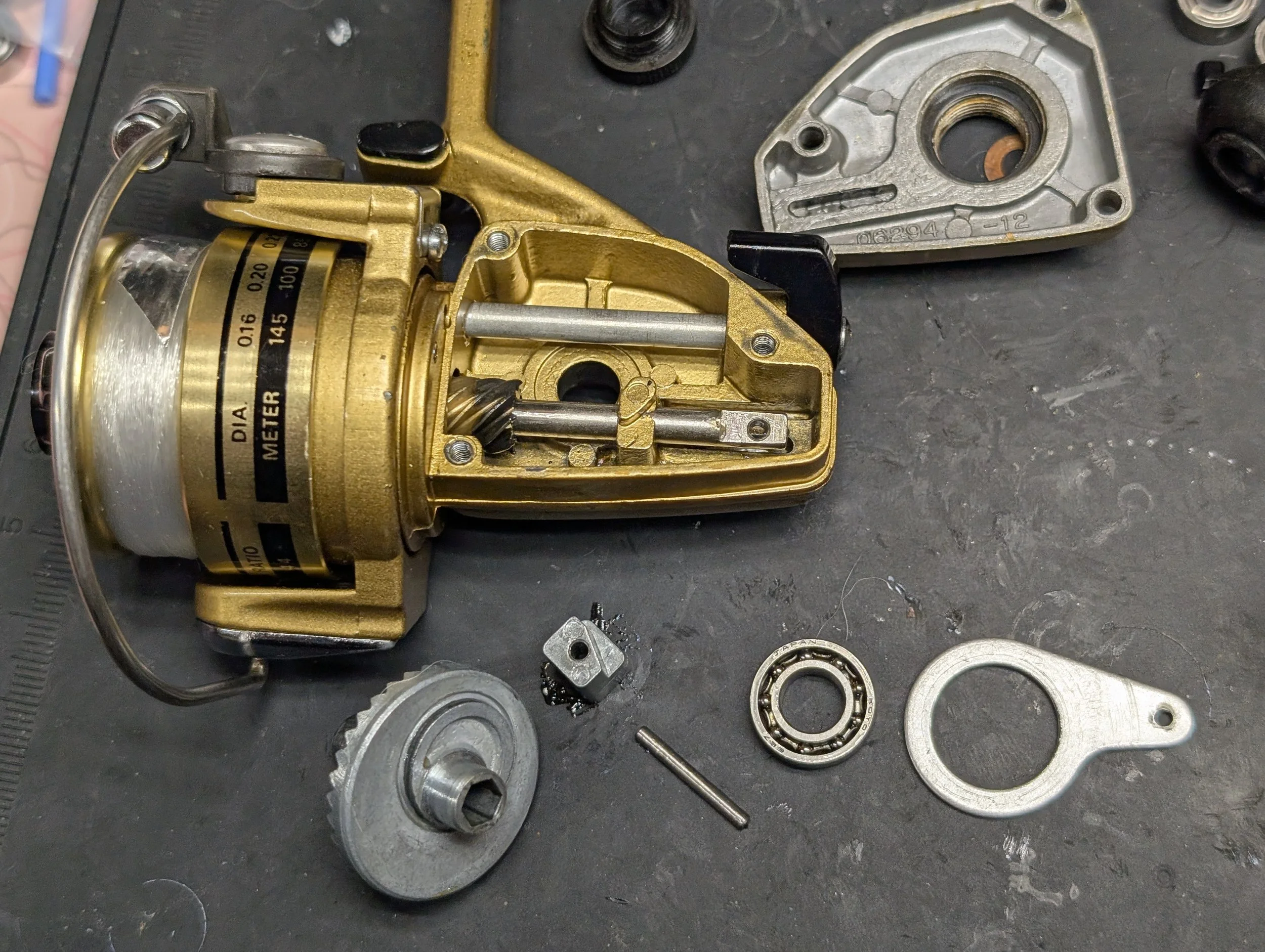
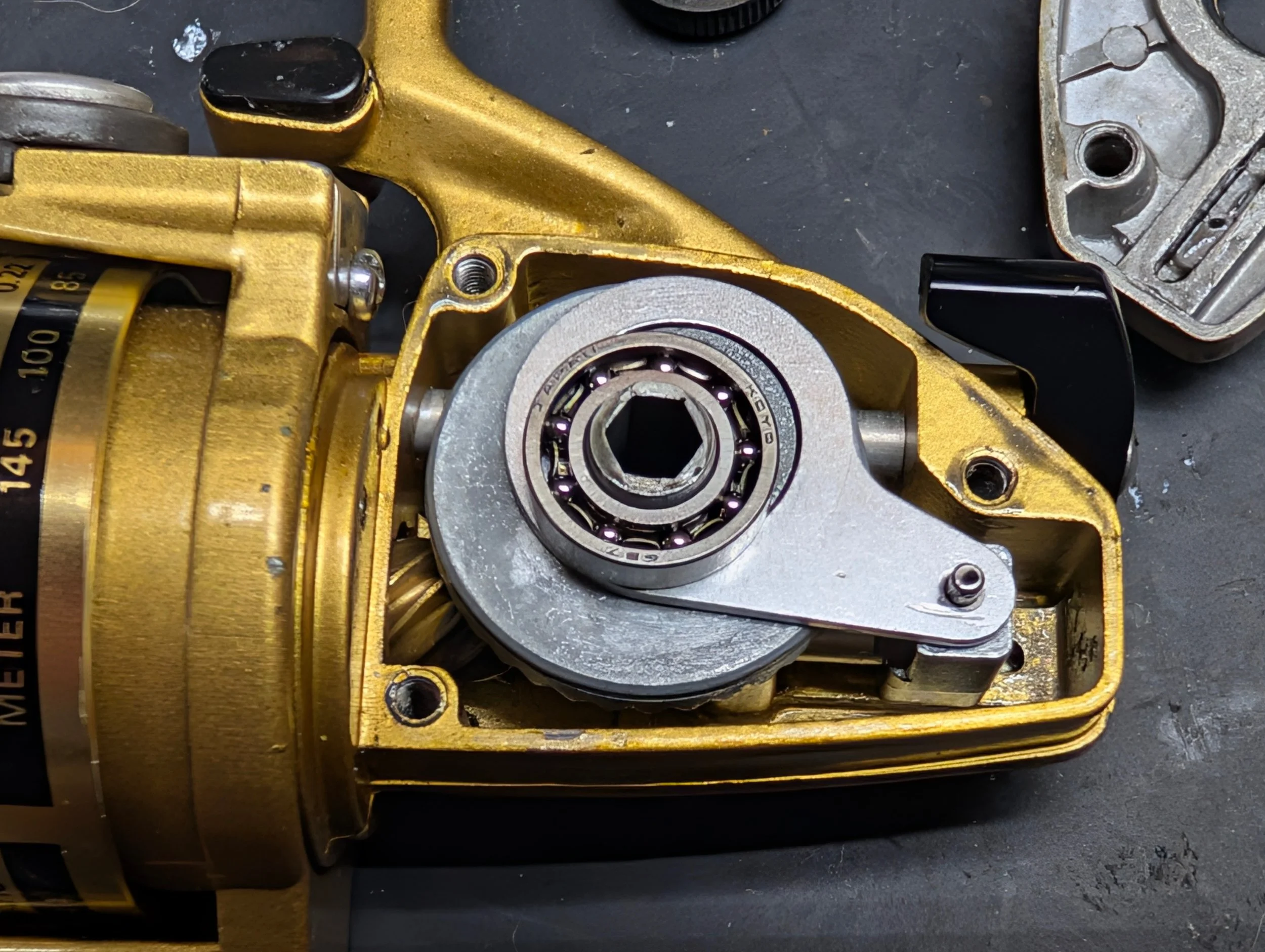
While I appreciate the smoothness and refinement of newer stuff, I can’t say that I would be comfortable on a lengthy hike-in fishing trip to a remote place with one. I pack light, which usually means just a single rod and reel combo. What happens if it gets dunked or a little sand becomes lodged inside? At that point it turns into a very long walk, while the tried and true Mini Mite will keep on going and continue to provide trout over the evening campfire. If I have to, I can crack it open back at camp and give it a once over with a Swiss Army Knife. With something newer, with its multitude of shims, bearings, and tight spots, it can be a monumental task in that situation and surely take more time away from the water. Plus I’d have to take a larger tool kit with me. Enter the apocalypse reel. Built for the long haul into the unknown.